
Skip to content

European Chinese Law Research Hub

  • Home
  • About Us
  • Follow Us
European Chinese Law Research Hub

Tag: Criminal Procedure

When Algorithms Meet Justice: A Deep Dive into AI-assisted Criminal Proceedings in China

15. January 2026
By Wanqiang Wu and Xifen Lin
This is contribution #4 in our series SMART COURTS AND SMART GOVERNANCE IN CHINA, outcome of our workshop in July 2025 at Cologne University.

Picture a prosecutor in Shanghai opening their computer to review a theft case. Instead of manually searching through thousands of precedents, they turn to an AI system that instantly analyzes the evidence and recommends similar cases from a database of millions. Within minutes, the system suggests whether to detain the suspect and even predicts the likely sentence. This isn’t science fiction anymore, it is the reality of China’s “206” system, arguably one of the most ambitious experiments in AI-assisted criminal justice worldwide.

The Rise of Smart Justice in China

Since 2016, China rapidly embraced what it calls “Smart Justice” (智慧司法), integrating artificial intelligence throughout its legal system. The Shanghai “206” system represents one frontline pioneer of this transformation. Unlike AI applications in “Western” courts that focus on specific tasks like risk assessment, China’s system attempts something far more comprehensive: it assists judges and prosecutors across the entire criminal process, from pre-trial detention decisions to sentencing recommendations.

What makes this particularly fascinating is not just the technology itself, but the institutional context. China’s judicial system, operating without the constraints of judicial review traditions found in many “Western” courts, has adopted AI technologies with remarkable speed and minimal resistance. The AI-assisted system now processes hundreds and thousands of cases annually, with the “206” system expected to be utilized in all criminal cases in Shanghai.

How Does It Actually Work?

The “206” system’s core feature is its Similar Case Recommendation function, which operates like a sophisticated legal search engine on steroids. When a prosecutor inputs case details, the system uses deep learning algorithms trained on past verdicts to identify patterns and recommend outcomes. It considers over 50 variables, from the suspect’s employment history to whether victims have forgiven the accused, to generate sentence recommendations.

The system does not just help with individual decisions. For example, in plea leniency cases (which now account for 87% of criminal cases in China), prosecutors may display the AI’s predictions to negotiate with defendants. “Look,” they might say, “based on our AI system, you’re likely facing 3-5 years of imprisonment. If you plead guilty now, we can recommend the lower end according to the law.” The system has changed the dynamics of criminal justice negotiations.

The Good, The Bad, and The Algorithmic

Our research, building on exclusive data from Shanghai’s procuratorate, reveals a complex picture. On the positive side, the data suggest genuine improvements: cases processed with AI assistance took 23% less time to complete, and sentencing recommendations made with AI support were accepted by judges 75.8% of the time, whereas they only accepted 65.6% of the sentencing recommendations without AI support. The system appears to reduce arbitrary detention and increase consistency in sentencing.

However, three critical concerns emerged based on our fieldwork. First, the anchoring effect: when prosecutors see the AI’s recommendation first, it becomes incredibly difficult for them to deviate, even when case specifics might warrant a deviation from the recommended sentence. Once the prosecutor sees the recommended number on the screen, she or he ascribes a sometimes unwarranted authority to it.

Second, accountability avoidance: the system’s complexity creates a perfect excuse for passing the buck should errors occur in sentencing. If something goes wrong, was it the algorithm’s fault? The fault of the system developer? The fault of the prosecutor or judge who relied on the system? This diffusion of responsibility poses serious challenges to China’s judicial accountability reforms.

Third, and perhaps most troubling, is the compression of the rights to a proper defense. Defense lawyers have no access to the system, cannot challenge its algorithms, and often do not even know that it is being used. While prosecutors wield sophisticated AI tools funded by public money, defendants and their lawyers are left in the dark. This to some extent amplifies the already existing problems of an unequal playing field in criminal justice.

Lessons for the Global Legal Community

What can the rest of the world learn from China’s bold experiment? First, procedural design matters more than technological sophistication. Our research suggests that many of the risks associated with AI in criminal justice are not inherent to the technology but arise from how it is implemented. Simple procedural safeguards, like requiring judges to form initial opinions before consulting AI, or ensuring that the defense has access to algorithmic tools, could mitigate many concerns.

Second, transparency isn’t optional. The closed nature of China’s system, where algorithms operate as black boxes hidden behind claims of trade secrets of technology providing companies, undermines procedural justice. Any jurisdiction considering adopting AI for prosecution or adjudication work must grapple with balancing technological innovation with fundamental legal principles like the right to a fair defense.

Finally, China’s experience confirms a widely observed paradox: AI systems designed to reduce human bias and increase consistency may actually entrench existing patterns of injustice if they are trained on historical data reflecting those very biases. The algorithm does not innovate; it replicates and amplifies patterns that have previously manifested.

Looking Ahead

As courts worldwide grapple with backlogs and inconsistencies, China’s aggressive adoption of AI offers both inspiration and cautionary tales. The technology clearly has potential to improve efficiency and consistency in criminal justice. But our research suggests that without careful attention to procedural safeguards, transparency, and equal access, AI applications risk creating a two-tiered system of justice where algorithmic efficiency trumps fundamental fairness. The question is not whether AI will transform criminal justice, but whether we can design systems that harness AI’s benefits while preserving the procedural protections that define justice itself.

The full article titled Access to technology, access to justice: China’s artificial intelligence application in criminal proceedings can be accessed here.

Wanqiang (Aiden) Wu is a Yat-sen Postdoctoral Fellow at Sun Yat-sen University Law School. He received his Ph.D. in Criminal Procedure Law (Cum Laude) from Shanghai Jiao Tong University in 2025. His research focuses on criminal procedure, empirical legal studies, and the intersection of technology and criminal justice in China. He has published extensively on China’s procuratorial system and judicial reforms in leading journals including Modern China, Hong Kong Law Journal, and International Journal of Law, Crime and Justice. Contact him via email.

Xifen Lin is Professor of Law and Vice Dean at KoGuan School of Law, Shanghai Jiao Tong University. Professor Lin is a leading scholar in Chinese criminal procedure and judicial reform, with particular expertise in prosecutorial systems and empirical legal studies. Contact him via email.

General, Smart Courts, Smart Governance Series Automated Sentencing, Criminal justice, Criminal Procedure, Procuratorates, Smart courts

How to Evaluate Prosecutors? China’s Shift from “Line Appraisal” to “Case-Process Ratio”

1
20. September 2024
A new paper by Peter Chi Han Chan and Wanqiang Aiden Wu
The Supreme People’s Procuratorate in Beijing photo by EditQ

In 2020, China’s Supreme People’s Procuratorate (SPP) initiated a transformative reform in the performance evaluation of prosecutors that promises to reshape the legal landscape significantly. For decades, Chinese prosecutors were assessed mainly on the volume of cases they handled by their department leaders, also known as the “Line Appraisal” model. This approach emphasized quantitative metrics, like conviction rates and case closure speed, sometimes even at the expense of thoroughness and the quality of justice. The result was a prosecution system that tended to prioritize quantity over quality, raising concerns about fairness and the effectiveness of the legal process.

Recognizing these limitations, the SPP launched the performance evaluation reform of “Case-Process Ratio 案-件比”. This innovative approach shifts the focus from sheer numbers to a more nuanced evaluation of the prosecutorial process, aiming to reduce unnecessary procedures and improve the overall efficiency and quality of case handling. The “Case-Process Ratio” measures the balance between the number of cases and the procedural steps required, with an ideal ratio indicating that each case is handled with minimal yet sufficient procedural actions to ensure justice.

The “Case-Process Ratio” model introduces several key improvements to the prosecutorial system. By focusing on reducing unnecessary procedures, it encourages prosecutors to streamline their case management, saving time and resources. This change is expected to enhance the efficiency of legal proceedings and reduce the burden on all parties involved. Additionally, by incorporating the perceptions of the involved parties into the evaluation process, the model emphasizes the importance of public trust in the legal system—a crucial factor in maintaining social stability and the rule of law.

This new model deviates from the traditional result-oriented approach of the “Line Appraisal” model, which focuses mainly on departmental indicators such as conviction rate of the prosecution department and arrest rate of the arrest department. Drawing upon two universal experiences, the “Case-Process Ratio” pioneers a more holistic assessment, taking into account parties’ perceptions of the prosecution process and underscoring the socio-political implications of prosecutorial conduct. This is also an ambitious move for the SPP to gradually evolve from being a mere crime controller to a “social governor”, who clearly enjoys a more integrated jurisdiction and a wider reach in terms of institutional power.

This reform is more than a technical adjustment; it reflects a broader transformation in the role of Chinese prosecutors. Historically, prosecutors in China were seen primarily as crime controllers, focusing on conviction rates and the supervision of legal processes to maintain social order. However, the SPP’s new evaluation model is part of a broader set of reforms aimed at transforming prosecutors into “social governors”—figures who not only enforce the law but also contribute to the governance and well-being of society. This expanded role requires prosecutors to consider the broader social impact of their actions, manage cases in a way that is more attentive to the personal experiences of those under their jurisdiction, and ensure that the legal process is perceived as fair and just by the public.

However, the new model is not without its challenges. One of the most significant concerns is that while the “Case-Process Ratio” model aims to improve procedural quality, it may still inadvertently reinforce the prosecutor’s traditional role as a crime controller. For instance, the traditional metric of case closure speed has not been eliminated and remains one of the core indicators in the overall evaluation system, albeit less emphasized than before, prosecutors may still feel pressured to close cases quickly, potentially prioritizing speed over quality. The procedural controls introduced by the new model, while designed to ensure fairness and efficiency, could also limit prosecutors’ flexibility, forcing them to adhere to strict guidelines that may not always suit the nuances of individual cases.

On the whole, the “Case-Process Ratio” model is part of a larger wave of legal reforms in China, designed to modernize the prosecutorial system and align it with broader goals of national governance. These reforms include the integration of arrest approval and prosecution powers, the introduction of the plea leniency system, and efforts to enhance the standardization of legal processes. Together, these changes aim to create a more cohesive and effective legal system that can better respond to societal needs.

As China’s legal system continues to evolve, the “Case-Process Ratio” model represents a significant step forward in the quest for a more efficient, just, and socially responsive prosecutorial system. Its success will depend on how well it can balance the need for procedural integrity with the broader goals of legal and social governance. The shift from a caseload-driven model to one that prioritizes procedural quality marks a turning point in the role of prosecutors in China. It signals a move towards a more holistic approach to justice—one that recognizes the importance of fairness, efficiency, and public trust in the legal system. As this reform unfolds, it will undoubtedly serve as a valuable case study for legal systems worldwide, offering insights into the challenges and opportunities of modernizing prosecutorial practices in a rapidly changing society.

The paper From “Line Appraisal” to “Case-Process Ratio”: Will the New Case Quality Assessment System Facilitate the Changing Role of Chinese Prosecutor? was published in the Hong Kong Law Journal. A free draft is uploaded to SSRN.

Peter C. H. Chan is Associate Professor at the City University of Hong Kong, School of Law where he also serves as the Associate Programme Director of LLMArbDR programme. His publications and contact information can be found on SSRN.

Wanqiang Wu is a PhD candidate at Shanghai Jiao Tong University who is entering the academic job market and is open to employment opportunities. His research focuses on China’s criminal justice system, employing empirical research methods and socio-legal analysis. His publications and contact information can be found on Google Scholar.

General Criminal Law, Criminal Procedure, Judicial Reforms, Supreme People's Procuratorate

Chinese Courts and Criminal Procedure – Q&A about the new book with editor Björn Ahl

8. September 2021

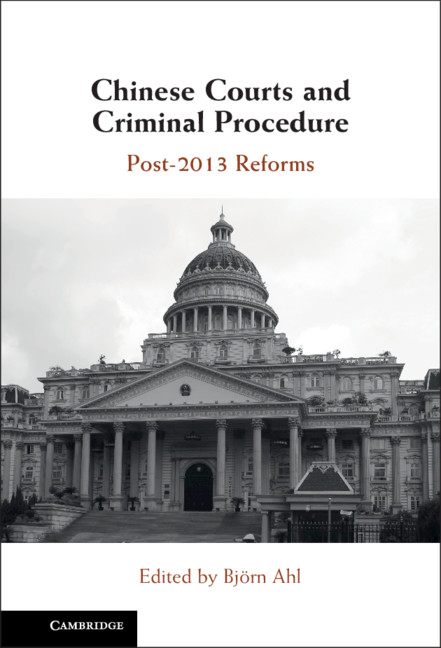
Chinese Courts and Criminal Procedure – Post 2013 Reforms was published this year with Cambridge University Press

The Xi’An Intermediate People’s Court
  1. In a nutshell: With its observations of a range of topics, what does this book tell us about the trajectory of criminal justice in China?

One of the main achievements of the book is to bring together contributions that look at Chinese court reforms and criminal procedure law reforms. Moreover, the book combines a wide range of analytical perspectives and themes in order to investigate questions that link institutional changes within the court system and legal environment with developments in criminal procedure law. The common denominator in the broad array of topics discussed in this volume is the multitude of forces attempting to influence the trajectory of judicial reform and criminal justice in China. The complex dynamics, and particular interests, of the numerous agents and subjects involved in the process intermingle with any undertaking to effective systemic change in the Chinese judiciary. These dynamics may play out in different ways. They may, for example, be mutually reinforcing, as in the case of the intra-court personnel reforms, heightened transparency, resilience against media influence and reform of the adjudication committees, all of which may result, to use the words of Fu Yulin, the author of chapter 2 of the book, in the by-product of a more independent judiciary. However, parallel reform projects can also interfere with one another, impeding the intended effects of each, as evidenced by the difficult position of the procuratorates in the criminal justice reforms, given that the envisioned trial-centred proceedings mandate the more prolific and active use of live witness testimony.

  1. Judicial Reform is an ongoing endeavour since reform and opening. (How) has the direction changed under the Xi Jinping administration?

Due to far-reaching limitations of civil and political rights, increased repression of political dissent and mass internment in Xinjiang, legal developments in the Xi Jinping era are generally perceived outside China as subject to unrestricted authoritarian rule that has largely side-lined legal institutions, including the Chinese courts. However, the court reforms of the post-2013 period have provided judges and courts with more autonomy in the adjudication of cases. Under Xi Jinping, court reforms have returned to the idea of rule-based governance, brought the court system back to the centre of dispute resolution, and emphasised professionalism, autonomous decision-making, the transparency and accountability of judges, and centralisation of the judiciary. The Decision on Governing the Country According to Law of the 4th Plenum, attempts at the normative regulation of inner-party affairs by strengthening rule-based governance and the October 2018 amendment of the People’s Court Organisation Law all underscore the regime’s efforts to formalise legal procedures and strengthen legality. Court reforms have taken a more radical turn than those passed under preceding administrations, as a vast range of measures have been introduced to render judges and the courts less susceptible to local government interference and increase the efficiency of the judiciary. The strengthening of the courts as professional, autonomous arbitrators of legal disputes was effected through both a centralised judicial authority and controlled experimental reform measures at the local level.    

  1. Xi Jinping’s leadership has amended the Constitution three years back, among others lifting the term limits for his own rule. Among the changes made, which are most consequential for criminal procedure in China?

Apart from abolishing the term limits of the state president, the 2018 constitutional amendment established the National Supervision Commission as a new state organ that merged the anti-corruption agencies of the party and the state. Supervision commissions were also introduced at the local levels. The National Supervision Commission has now been afforded an independent constitutional status that allows it to exercise both administrative and criminal supervisory powers in supervising, investigating, disciplining and sanctioning public officials. Rather than constituting an independent state institution, the supervision commissions have absorbed state functions that are now directly controlled by Party disciplinary inspection commissions at the various administrative levels, the members of which simultaneously hold positions in the state’s supervision commissions. The supervision commissions are not subject to the legal constraints on investigative powers stipulated in the Criminal Procedure Law, although they enjoy de facto power to conduct criminal investigations and gather evidence that is admissible in criminal trials. The Supervision Law’s coverage has been extended to all public employees who exercise public power rather than being restricted to Party members alone, as under the previous scope of investigation by the disciplinary inspection commissions. Meng Ye in chapter 5 of the book provides an in-depth analysis of the supervision commissions.
  1. The volume zooms in on a number of themes in the reform of criminal procedure. What do the observations have to offer in response to the claim that the rule of law is a lost cause in China?

The answer to this question depends on how you define the rule of law. If we take the term in its liberal sense and require that the law effectively constrains all levels of government and comprehensively controls the political process, then the overall direction of procedural and institutional reforms during the post-2013 era is disappointing. In general, the dominance of the party over the law has been re-emphasised on the ideological and institutional levels. It is stressed that the effectiveness of the law hinges on permanent affirmation and supervision by the party. The reforms do not directly aim at improving the protection of rights of the individuals involved in criminal procedures. However, improvements in terms of the protection of rights may occur as by-products of some reform measures. Many court reforms are part of a general centralisation dynamic and aim at insulating courts from improper horizontal influence of local actors, while strengthening vertical control over the court system. What this change from ‘improper influence’ to ‘proper influence’ means for the development of a ‘socialist rule of law’ is difficult to measure. The court and criminal procedure law reforms are oriented towards unified application of the law, they rely on technology and data-driven innovations that reduce human discretion, they have enhanced professionalisation, transparency and vertical control of courts as well as given individual judges and panels of judges greater autonomy in adjudication. However, criminal procedure reforms aim at enhancing Party-state governance effectively control crime and political dissent in order to maintain Party supremacy and social stability. To sum up, the reforms have strengthened the instrumentalist aspects of law and formal legality but not necessarily due process or human rights protection.

  1. How can the role of the Supreme People’s Court be described in criminal procedure developments?

This issue is addressed in detail by Susan Finder in her chapter on how the SPC adopts judicial interpretations of the criminal procedure law. The SPC is the most important institutional actor linking court reform and criminal procedure reform, with the dynamics of both grounded in the administrative and legislative functions of the SPC. Those functions are distinct characteristics of China’s highest court that are not shared by the apex courts of other jurisdictions. Although the SPC has an important adjudicative function as an appeal court, its legislative function has elevated it to the role of a legislator. The SPC wields these powers through judicial interpretations that are often more relevant to adjudicative practice in procedural law than the laws passed by the NPC or its Standing Committee. Further, the SPC exercises administrative powers over the entire court system, including the design and implementation of court reforms in cooperation with the relevant party organs. The SPC’s judicial interpretation drafting process is an example of secluded, bureaucratic law-making in which the political interests of the CPC and the institutional interests of the SPC and the judiciary as a whole dominate.

  1. What are other actors exerting influence in the development of criminal justice and courts in China? 

The book focuses on the Supreme People’s Court as a major actor of initiating and implementing institutional and procedural reforms. Yet we should not underestimate the role of the academia in the development of criminal procedure law and court reforms. Many of the reform measures were proposed by legal scholars and have been discussed for some time before they were taken up by the party-state leadership. Of course, legal scholars have no power to determine reform priorities or to take decisions about what kind of reform models shall be adopted, but Chinese legal scholarship is the most important intellectual resource from which decisionmakers draw.

  1. Developments in Chinese law have been informed by systems and laws in other countries. Does criminal procedure reform look to other countries for reference?

All major Chinese legal reforms in the last decades were preceded by comparative studies of legislation, scholarship and judicial practice of foreign jurisdictions. Apart from foreign jurisdictions, international human rights treaties that set standards for criminal trials have been a central reference point of academic discussions. However, nowadays debates about foreign legal models and their suitability for China only take place in the background. In contrast to earlier periods of the reform and opening period, official documents refrain from references to foreign or international law and place the indigenous Chinese experience at the centre. The widespread use of the terms ‘Chinese characteristics’ and ‘selective adaptation’ of foreign models indicate legal reform relies on indigenous resources and technology and data-driven innovations rather than on the adoption of ‘Western’ law. Indeed, Chinese legal institutions and procedural laws are quite distinct from those of liberal rule of law systems as the Chinese authoritarian system has certain features that determine the shape and operation of legal institutions and the law. For example, the supremacy of the Communist Party requires channels of ‘proper interference’ with judicial decision-making processes in order to effectuate its comprehensive overview of the implementation of law.     

Contributors to the volume ‘Chinese Courts and Criminal Procedure‘, published with Cambridge University Press, include Xiaohong Yu, Yulin Fu, Susan Finder, Ye Meng, Alexandra Kaiser, Zhiyuan Guo, Kwai Hang Ng, Xin He, Michelle Miao, and Daniel Sprick. The editor Björn Ahl is Professor and Chair of Chinese Legal Culture, Cologne University and President of the European China Law Studies Association.
General Chinese courts, Criminal Procedure, Rule of Law

Chinese Courts and Criminal Procedure: Post-2013 Reforms

29. July 2020
A new volume edited by Björn Ahl
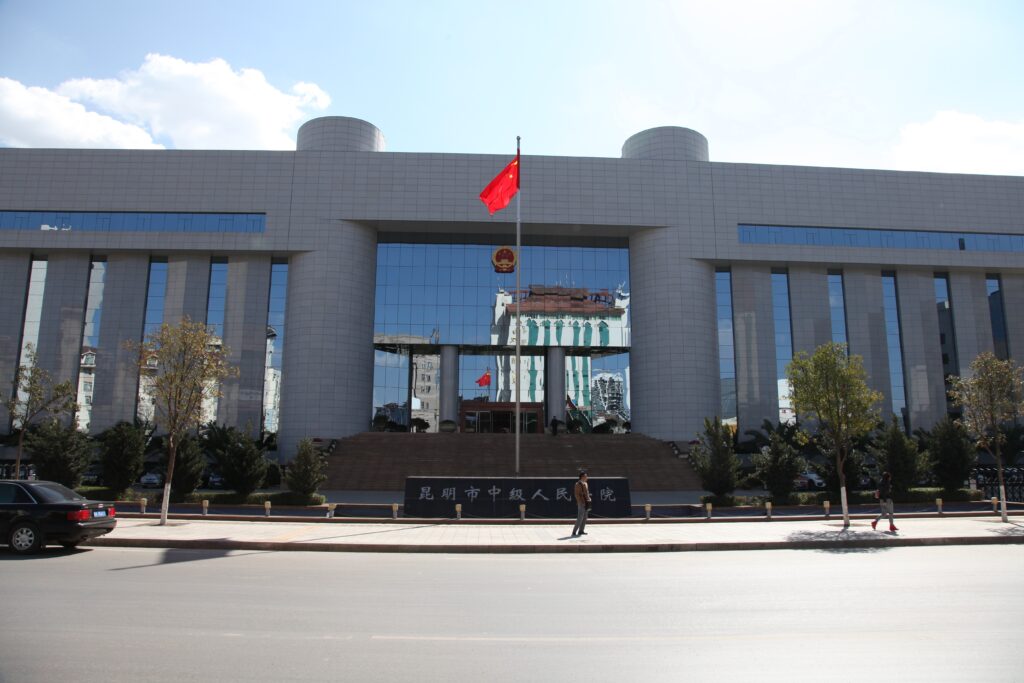
Kunming Intermediate People’s Court

Although many regard the post-2013 era as a return to unchecked authoritarianism that undermined the law and institutions, the current administration has introduced groundbreaking institutional reforms. Many of them have brought about the somewhat counterintuitive result of increased institutional autonomy.

Björn Ahl has edited a book on Chinese courts and criminal procedure that focuses on the post-2013 era. It combines a wide range of analytical perspectives and themes in order to investigate questions that link institutional changes within the court system and legal environment with developments in criminal procedure law. 

The edited volume includes the following chapters:

1. Post-2013 Reforms of the Chinese Courts and Criminal Procedure: An Introduction (Björn Ahl) (preliminary version already available on SSRN)

2. The Meandering Path of Judicial Reform with Chinese Characteristics (Yu Xiaohong),

3. Dimensions and Contradictions of Judicial Reforms in China (Fu Yulin),

4. How the Supreme People’s Court Drafts Criminal Procedure Judicial Interpretations (Susan Finder),

5.  Judicial (Dis-)Empowerment and Centralization Efforts: Institutional Impacts of China’s New Supervision Commissions (Meng Ye),

6.New Model of Habeas Corpus in China? Procuratorial Necessity Examination of Pre-Trial Custody (Alexandra Kaiser),

7. Live Witness Testimony in the Chinese Criminal Courts (Guo Zhiyuan),

8. Blood Money and Negotiated Justice in China (Kwai Hang Ng and He Xin),

9. Performance Evaluation in the Context of Criminal Justice Reform: A Critical Analysis (Michelle Miao),

10.  From Populism to Professionalism: The Media and Criminal Justice in China (Daniel Sprick). 

The book will be published by Cambridge University Press in 2021. A version of the introductory chapter is available on SSRN here.

General Chinese courts, Criminal Procedure, Judicial Reform

Recent Posts

  • China’s Export Control of Dual Use Items: From Multilateralism to Extraterritoriality
  • When Algorithms Meet Justice: A Deep Dive into AI-assisted Criminal Proceedings in China
  • Big Data Cannot Answer All Questions About Chinese Courts
  • The Iron Fist in a Digital Glove: How the CCP Manages Its Members with Apps
  • Smart Court, Smarter Party: A Necessary but Incomplete Interpenetration

Tags

Adjudication Administrative Enforcement Administrative Procedure Arbitration Authoritarian Legality China International Commercial Court Chinese courts Civil Code Civil Law Civil litigation Communist Party Comparative Law Constitutional Law Contract Law Covid-19 Criminal justice Criminal Law Criminal Procedure Data Protection Digitalization Fintech Force Majeure Hong Kong Human Rights Judges Judicial Reform Judicial Reforms Labour Law Latin America Law and Development Lawyers Legal Culture Legal History Migration One Belt One Road Open Public Data Public International Law Regulation Regulation of AI Rule by Law Rule of Law Smart courts Social Credit System Supreme People's Court Supreme People's Procuratorate

Subscribe to our newsletter…

...to be the first to learn about new blogposts.

Idealist by NewMediaThemes