The main entrance of the Supreme People’s Court of China in Beijing Photo by Rneches
How does the Chinese political-legal system operate in the Xi Jinping era? This article published in the China Law and Society Review provides a detailed discussion of the poorly understood operations of the Supreme People’s Court (SPC) including its intricate interactions with central Party and state institutions, against the background of strengthened Party leadership. It provides insights into specific aspects of the Party’s leadership of the judiciary and its implications, usually unseen functions and operations of the SPC, and the link between Party policy, the judiciary, and the development of Chinese law.
I focus on the roles of the SPC in supporting “foreign-related rule of law” as an example of how the work of China’s highest court has evolved in the Xi Jinping New Era to support more robustly major national strategies. The article examines functions of the SPC little explored previously, because some are only partially transparent. I first summarize developments concerning the strengthening of Party leadership over political-legal institutions, because those have a direct and indirect impact on the SPC’s foreign-related judicial work. I highlight the greater focus on the SPC’s leadership’s fulfillment of political obligations and responsibility to the Party leadership. Providing appropriate judicial support for national strategies is an important way in which the SPC as a political-legal institution fulfills its political obligations to the Party leadership.
The SPC functions identified as most important in developing foreign-related rule of law are, first, policy-making and guidance of the lower courts; second, “law-making;” third, case hearing and selection; and fourth, coordinating and cooperating with central Party and state institutions. The characterization of the functions is original to this article. The non-case hearing functions are linked in some way to hearing cases and are ones the SPC has always performed.
In contrast to most apex courts globally, the work of the SPC in supporting “foreign-related rule of law” is more focused on policy-making and influencing legal and judicial policies; providing guidance to the lower courts, what this article describes as “law-making”; and coordinating and cooperating with other central Party and state institutions, rather than making judicial decisions.
First, part of the SPC’s role is to create, amend, and implement judicial policy in response to or in anticipation of the impact of changes in Party and state policy or other social, economic, or legal changes. One of the principal ways in which the SPC publicizes new or amended judicial policy is by issuing judicial policy documents. These documents guide and inform the lower courts about new or readjusted judicial policy and inform related central Party and state institutions about these developments. They also signal to the Party leadership that their initiative is being implemented. In some areas of law, the SPC leads the legal and judicial policy initiative, while in others, it provides its expertise when other institutions take the lead. The policy documents and any typical cases issued in addition to or in lieu of a policy document contain both political and substantive guidance intended to guide lower court judges both in frontline and leadership roles. These documents may not be cited in court judgments or rulings but may have an impact on judicial thinking.
Second, an important but less-understood part of the role of the SPC in contributing to the development of China’s foreign-related legal system is “law-making.” This characterization is meant to convey the SPC’s contribution to legislation described by the SPC as “actively cooperating with foreign-related legislation” (积极配合涉外立法), not as a formal assertion that the SPC makes law. This contribution takes several forms, not all of them formalized in law. The first type is provided by the Legislation Law which authorizes the SPC to submit legislative bills to the National People’s Congress (NPC), and the NPC Standing Committee. The second type is by drafting and issuing judicial interpretations, as authorized by the Organic Law of the People’s Courts and the Legislation Law. The SPC has the authority to issue meeting minutes (conference summaries) and similar documents which have a less certain formal authority but are highly persuasive in practice.
Two other types lack specific legislative authority but are important ways in which the SPC contributes to legislation, particularly foreign-related legislation: providing support to the NPC and the NPC Standing Committee when it drafts legislation; and providing support to the Ministry of Justice and other Party and state institutions when those institutions draft legislation that is eventually submitted to the NPC or the NPC Standing Committee. These two ways combine the SPCs indirect law-making role with its cooperation role. The extent to which the SPC participates in “law-making” in foreign-related matters is not entirely clear because related documents are made public sparingly.
The people’s courts are a highly political professional institution, and a highly professional political institution (人民法院是政治性很强的业务机关,也是业务性很强的政治机关)
Official SPC media channels
Third, the SPC decides some cases involving foreign-related commercial law and issues some cases as guidance, either as guiding or typical cases. It decides some cases relating to arbitration through an administrative procedure, others through retrial or second instance procedures, and others when certain selected SPC judges sit as panels of the China International Commercial Court. Additionally, the SPC issues cases as guiding, or more often typical cases as a form of guidance. The SPC occasionally issues guiding cases but more often issues typical cases to provide political and substantive guidance for the lower courts, sometimes linked to a policy document.
Fourth, one of the unrecognized functions of the SPC is coordination with other central Party and state organs regarding specific legal issues, based on bureaucratic custom. This work is only partially visible. The SPC has coordinated and cooperated with other central Party and state institutions on a broad variety of legal matters for many years, but it appears to be little discussed in English-language literature. The coordination and cooperation take a variety of forms, and which institutions and departments are relevant depends on the matter under consideration. For example, the SPC provides support to the Ministry of Foreign Affairs or other ministries that lead treaty or convention negotiations, such as the Ministry of Commerce.
The article concludes that the SPC’s foreign-related legal expertise, as shown by the Politburo’s November, 2023 collective study session on foreign-related rule of law, has become significantly more important to China’s political leadership and other central-level Party and state institutions. Its significance to the political leadership is in its work in creating a body of foreign-related law. Given that the Party leadership increasingly stresses political leadership of the courts and political competence of members of the judiciary, carrying out the functions described above requires SPC judges dealing with foreign-related matters to have both a high degree of political consciousness and technical expertise. Why? As the SPC media often say, “the people’s courts are a highly political professional institution, and a highly professional political institution” (人民法院是政治性很强的业务机关,也是业务性很强的政治机关).
Susan Finder is a long-standing observer of the Chinese judicial system with more than 30 years of experience. She is a member of the international commercial expert committee of the China International Commercial Court (CICC) of the Supreme People’s Court and on the committee of the Shanghai International Arbitration Center. The views expressed in this article are her own, not those of either institution. She is a Distinguished Scholar in Residence at the School of Transnational Law of Peking University (Shenzhen), where she teaches about judicial reform in comparative perspective. Her blog, the Supreme People’s Court Monitor, is arguably the most authoritative scholarly resource on developments around the People’s Republic of China’s highest court. Follow her on Twitter @SPCmonitor or get in touch per email at susan.finder[at]outlook.com
In response to an apartment fire in Urumqi which killed eleven residents in November 2022, Shanghai residents took to the city’s Urumqi Road, protesting peacefully against China’s zero-covid policy. While the protests resulted in the official end of nearly all Covid-19 related restrictions, several participants were detained and sentenced for picking quarrels and provoking trouble (Criminal Code Art. 293). Photo by Cinea467
However, picking quarrels is not confined to politically sensitive cases. Authorities also employ it to enforce state-approved moral standards, leading to the criminalization of individuals for morally contentious actions or speech on social media. For instance, a Douyin (Chinese TikTok) creator received a prison sentence for pretending to engage in a fictional fight against imaginary opponents, deemed as provoking social disorder by local police ((2019) 湘1124刑初119号).
Picking quarrels is legally defined in Article 293 of China’s Criminal Code, encompassing the following actions:
(1) Arbitrarily attacking people with particularly grave circumstances;
(2) Chasing, intercepting, or berating others with particularly grave circumstances;
(3) Forcibly taking, destroying, or occupying public or private property with serious circumstances;
(4) Making a commotion and causing serious disorder in a public place.
Penalties range from supervised release to five years of imprisonment, with up to ten years for those repeatedly inciting others to disrupt social order.
However, the broad and vague application of this offense makes it difficult to establish a direct link between Article 293 and many specific picking quarrels cases. Sub-category 4, “making a commotion,” acts as a catchall within a catchall, allowing authorities to prosecute objectionable acts or speech under the pretext of causing disorder in public venues. Importantly, despite whether a case is politically motivated or not, picking quarrels is applied arbitrarily in both situations. This raises an intriguing question: to what extent is the boundary between political and non-political spheres significant within an authoritarian legal system like China’s?
Today, scholarly debates on “authoritarian legality” in China offer varying views. Optimists view the centralization of power through legalistic means positively, while critics argue that the Chinese legal system, as a whole, deviates from the rule of law, especially under Xi Jinping’s leadership. The theory of legal duality suggests the coexistence of a genuine legal order and a political agenda-driven state. However, many of these arguments assume China’s authoritarian legality is inherently tied to how strong the political nature of the issue is—whether it’s deemed “political” or not.
Despite ongoing debates, the significance of law in governing authoritarian systems is widely acknowledged—and it becomes crucial to grasp the essence and characteristics of authoritarian law. This article introduces the concept of legal rationality to illuminate authoritarian legality. It proposes that, whether a system is democratic or authoritarian, legal rationality denotes the intrinsic value of law that is publicly accessible, transparent, and consistent, serving to restrict the arbitrary discretion of individuals in positions of authority. Thus, if there is a decline in legal rationality within an authoritarian system, then it probably does not solely result in more political prosecutions but could also lead to heightened arbitrariness in non-political domains as well.
In China, post-Mao legal reform (since 1978) aimed to establish legal rationality for prosperity, stability, and regime legitimacy, and of course—also with the hope of helping to prevent political catastrophes like Mao Zedong’s Cultural Revolution. However, under Xi Jinping’s leadership, there has been a decline of legal rationality in both political and non-political spheres. This article offers two explanations for this decline. First, in an authoritarian system, officials tend to exercise arbitrary power as a convenient means to not only exert political control but also address governance issues (they often benefit personally from such actions as well). Second, China’s partial legal rationality has been mainly maintained through self-restraint by the CCP in the post-Mao era. As this self-restraint weakens, both political and non-political spheres are increasingly vulnerable to prerogative power erosion.
The example of picking quarrels vividly illustrates the decline of legal rationality in Xi’s China, leading to arbitrary actions within the political realm and routine criminal justice system. Throughout Mao Zedong’s reign from 1949 to 1978, hooliganism functioned as a versatile crime, diverging from legal rationality by being widely applied across both political and non-political contexts. China’s 1997 Criminal Code has replaced hooliganism with picking quarrels. “Subsequent efforts in the 2000s and early 2010s aimed at rationalizing picking quarrels through clarification of legal terms, moral detachment, and to a limited extent, depoliticization.
However, as mentioned earlier, Xi Jinping’s tenure saw a regression, reversing the trend of rationalization observed in earlier reforms. In both political cases and cases with less political nature, this excessive application of picking quarrels comes at the cost of the rationalization of China’s criminal legal system that had been developed during the reform era. This erosion extends beyond hyper political cases, affecting everyday legal and governance systems, blurring the line between political and non-political realms.
The decline of legal rationality across political spheres and ordinary justice in the case of China highlights the necessity of reevaluating our understanding of authoritarian systems—it might be the (ir)rationality of the law, rather than its political nature, that defines authoritarian legality.
Luo Jiajun is a Research Scholar in the Equality Rights Program at the Faculty of Law, University of Hong Kong. Luo recently received a Dissertation Year Fellowship from HKU for his outstanding (5%) PhD thesis titled “Chinese Courts: Unequal Justice”. From 2021 to 2023, he was a China Law Fellow at Georgetown University.He can be emailed atjiajunlok[at]gmail.com.
A new paper by Tianhao Chen, Wei Xu and Xiaohong Yu
In 2015, the revision of China’s Administrative Litigation Law introduced the Chief Officials’ Appearance System (COAS). The system requires agency leaders themselves, rather than their legal counsel, to appear in court and defend their administrative actions. Unlike other post-2014 legal reforms aimed at empowering the judicial system and fending off local protectionism, the COAS uniquely enhance the engagement of political officials in the judiciary process. This approach is based on the belief that increased participation will help officials to gain a better understanding of public concerns and improve administrative litigation quality. The detailed workings of the COAS were laid out in this previous blogpost by Nina Rotermund.
In this comprehensive study, we set out to assess how and whether the optimistic goals set for the COAS were achieved. Through an empirical analysis of 1551 administrative litigation cases in a Beijing local court and extensive field research across 12 other provinces, the study uncovers unexpected outcomes that merit a closer examination.
Contrary to official expectations, we find that the COAS reproduces the administrative grievances that it is tasked to resolve. Data from Beijing revealed that plaintiffs were 5.08 times more likely to appeal or file a new suit over the same issue when chief officials made court appearances. This tendency was attributed to a mismatch between the plaintiffs’ expectations for meaningful engagement and the often-detached demeanour of the officials, who sometimes resorted to reading from prepared statements without genuinely addressing the plaintiffs’ concerns. This lack of meaningful interaction left plaintiffs dissatisfied, propelling them to pursue further legal avenues.
Moreover, the number of administrative cases overall and the rates of the government losing cases before district leaders’ court attendances in Beijing’s 16 districts were not significantly higher than after they appeared in courts, indicating that lawful governance did not improve. This issue is related to the officials’ generally apathetic approach to court appearances. Statistics indicate that 73.6% of officials planned to conduct the required court visits only in the fourth quarter, when the annual cadre evaluation was underway. This figure is disproportionately higher than the proportions in the other three quarters. Further, the amount of officials’ appearances in court barely surpassed the number of appearances required to fulfil the performance evaluation criteria. This indicates that officials’ appearances are more about fulfilling administrative assessment requirements rather than genuinely improving lawful administration.
“[…] plaintiffs were the so-called nail households (dingzihu 钉子户), ones who refused to relocate and came to court only to claim better compensation. They wouldn’t be pleased by simply meeting the officials in person. Instead, sometimes they even interrogated the officials and we had to interrupt and stop them.”
Judge in Qinghai, August 2022
Despite this, the study also observed surprisingly impartial and even strategic responses from the court. Statistical analysis of Beijing data shows that the involvement of district leaders in court did not skew judicial outcomes in favour of the government. This is partly due to the strategic appointment of high-ranking judges in cases involving chief officials, ensuring a balance of authority in the courtroom. Moreover, the analysis reveals a nuanced trend wherein courts are more likely to rule against government officials who are nearing the end of their term, suggesting a strategic consideration of future relations with the administrative agencies.
Expanding the study nationwide revealed similar trends across China, albeit with regional variations. Through the “China Judicial Politics Database,” which includes 70% of publicly available cases, we identified 28,805 instances of official court appearances. Of these, a mere 146 involved officials at the bureau and deputy bureau levels, noting that the overall frequency of government leaders appearing in court remains low nationwide. Interviews conducted with judges, lawyers, and government officials from 12 provinces, including Zhejiang, Henan, Guizhou, Jiangsu, Guangdong, Sichuan, Qinghai, Shaanxi, Tianjin, Liaoning, Hebei, and Xinjiang, presented a complex but consistent picture. Similar to Beijing, official court appearances were rare and typically motivated by assessment requirements, leading to tense courtroom dynamics between disinterested officials and pragmatic plaintiffs. Courts employed diverse strategies to manage their interactions with the government, sometimes using the theatrical nature of appearances to exert pressure.
“[…] sometimes I would intentionally tolerate plaintiffs’ emotional expressions to exert extra pressure on administrative agencies.”
Judge in Zhejiang, April 2022
In sum, the study reveals that, contrary to what the creators of COAS had expected, the COAS has not significantly ameliorated administrative dispute resolution. Instead, it has resulted in a renewed triad of administrative litigation: apathetic state agencies, increasingly agitated plaintiffs and strategically empowered courts.
The unintended impacts of the COAS carry certain implications. Despite previous views of administrative litigation in China as no more than a “frail weapon” due to political constraints, the courts appear somewhat empowered, benefiting from the cumulative effects of several reform measures implemented over the last four decades and the strategic behaviours of judges. Additionally, plaintiffs’ willingness to pursue further legal action, fuelled by an increased legal awareness and desire for justice, challenges the notion that official appearances alone would placate citizens. Still water runs deep, and the perverse impact of the COAS implies that the rule-based approach to dispute resolution would be a more desirable and effective route than the paternalistic approach.
The paper ‘Administrative Litigation in China: Assessing the Chief Officials’ Appearance System’ was published in The China Quarterly (free draft available here). Tianhao Chen is an associate professor at the School of Public Policy and Management at Tsinghua University. His research focuses on administrative law, administrative agreements, judicial governance and technology ethics. His work has been published in Chinese Journal of Law, China Legal Science and Law Science.
Wei XU is a PhD candidate studying at the School of Public Policy and Management at Tsinghua University. Her research focuses on platform antitrust, judicial reform, public administration and law.
Xiaohong Yu (corresponding author) is an associate professor in the department of political science at Tsinghua University. Her research focuses on Chinese politics, judicial politics and empirical legal studies. Her work has been published in Journal of Empirical Legal Studies, The China Review and Tsinghua University Law Journal.She can be contacted at xyu[at]tsinghua.edu.cn.
In addressing artificial intelligence, the Chinese government has multiple roles: it simultaneously acts as a policymaker, an investor, a supplier, a customer, and a regulator.
In recent years, China has emerged as a pioneer in formulating some of the earliest and most comprehensive legislations regulating recommendation algorithms, deepfakes, and generative AI services. This has left the impression that China has stood at the forefront as a global leader in regulating AI. Matt Sheehan, a highly-regarded expert in Chinese AI policy suggests that the U.S. can gain valuable insights from China’s approach to AI governance. Industry observers therefore view Beijing’s regulatory approach as a potential obstacle to Chinese innovation. Such concerns are not unwarranted. In 2020-2022, China undertook a sweeping crackdown on its tech firms. The erratic nature of Chinese tech policy has unnerved investors, precipitating severe and unintended consequences of deterring investment and entry into the consumer tech business.
However, this perception that China has stood at the forefront in regulating AI fails to account for the intricate dynamics of the Chinese political economy. Authoritarian states face a dual-challenge with emerging technologies, as these technologies can empower civil society on one hand, while enhancing government surveillance capabilities and strengthening social stability on the other. Furthermore, technological advancements are crucial for economic growth and national competitiveness. To balance the need for stability and the desire to foster innovation, China has adopted a bifurcated approach to AI regulation: strict information control juxtaposed with industry-friendly regulation. This approach keenly reflects the complex utility function of the Chinese Communist Party, who seeks legitimacy through multiple sources including growth, stability, and nationalism.
Yet striking a balance between regulation and innovation is far from easy. The Chinese government assumes multiple roles in the AI ecosystem as a policymaker, an investor, a supplier, a customer, and a regulator. Given the government’s extensive involvement, it lacks a strong commitment to regulate the industry. Moreover, although AI can pose many social harms, they have not yet evolved into immediate threats to social and political stability. AI safety risks remain speculative, despite warnings from experts. The Chinese government also recognizes the economic benefits AI promises, amidst the intense Sino-US tech rivalry. The tightening of US export restrictions, which hinder Chinese AI firms’ access to advanced chips, have only intensified this competitive pressure, thereby diminishing the government’s incentive for strict regulation.
The Chinese government also faces significant constraints in imposing strict regulation on AI. China’s tech crackdown in 2020-2022 has demonstrated that harsh regulatory measures can generate strong repercussion in the market. Since early 2023, the Chinese economy has entered into a slump. The government’s focus has thus shifted towards revitalizing the economy and boosting market confidence. Consequently, despite appearances of proactive intervention, Chinese regulators have focused on fostering AI growth. The regulatory rules being adopted have sent strong pro-growth signals while attempting to facilitate stakeholder coordination to advance AI development. This close integration of industrial policy and law is a defining feature of Chinese AI regulation.
Understanding the nuances of China’s AI regulatory strategy is crucial not only for predicting the trajectory of its technological development but also for assessing its implications on the global tech rivalry. Major jurisdictions including both the U.S. and the EU are actively exploring the establishment of a comprehensive AI regulatory framework, as exemplified by the AI Act and Biden’s executive order. Leading US AI firms are involved in various litigations and face mounting pressure to negotiate licenses with media for the use of their content as training data. In contrast, China’s relatively more relaxed regulatory environment may offer its AI firms a short-term competitive advantage over their EU and U.S. counterparts.
Meanwhile, China’s approach could give rise to serious regulatory lag. This situation is aggravated by China’s weak market conditions, poor legal institutions, and the tightly coupled political system, potentially leading to latent risks that could escalate into AI-related crises. For example, the Chinese government is invigorating a “whole of society” approach to push forward AI development without necessarily taking effective precautionary measures. Under such a command-and-control strategy, by the time the full impact of AI harms become apparent to top policymakers, it could be too late for effective reversal or mitigation. This dynamic complexity of China’s AI regulation therefore underscores the urgent need for increased international dialogue and collaboration with the country to tackle the safety challenges in AI regulation.
‘Ecological civilisation’ has been a core pillar of the Communist Party of China’s political agenda in recent years. It highlights the growing importance of balancing economic growth with environmental protection. Environmental degradation comes from economic growth, economic growth relies on market functioning, and the market runs on private contracts. Private law doctrines, such as freedom of contract and limited liability of corporations, provide the legal and institutional framework that enables market actors (especially those with stronger bargaining power) to reap the profits from market transactions, while legally outsourcing the environmental externalities to the general public. Think of a cheap pair of jeans – it is cheap because its enormous environmental costs are not factored into its pricing and such pricing is possible because contract law allows/encourages us to only care about our immediate party (‘privity of contract’).
Granted, public environmental regulation poses significant limitations to private dealings. But if private law causes the problem in the first place, maybe we could also think about how we can address the problem from within private law. In the civil codification project since 2017, though the Chinese legislators refrained from a complete overhaul of existing civil legislation, they did endeavour to reconcile the tension between private autonomy and public environmental good. Among others, Art. 9 of the Chinese Civil Code (‘CCC’), which is often known as the ‘green principle’, prescribes sustainability as an overarching principle of private law. It reads: When conducting a civil activity, a person of the civil law shall act in a manner that facilitates conservation of resources and protection of the ecological environment.
This principle is highly abstract – just as abstract as other established principles in private law such as good faith and public policy. Judges in China, however, have not shied away from engaging with this principle, often in a rather creative way. For example, if I plant trees on your land illegally, you would think that you can rightfully ask me to cut them down. But several courts[1] said no – as trees could help prevent soil erosion. In another case,[2] the court reversed a homeowner association’s resolution that prohibited a homeowner from installing an electric vehicle charging station in the parking lot. The decision highlighted the scientific fact that electric cars can reduce fossil fuel consumption and have zero tailpipe emissions. (A side note: the Chinese authority has been actively promoting electric cars since the early 2000s.)
The green principle can be read as an attempt to align private law with the Constitution, which in the eyes of Chinese jurists is the ‘mother law’ that gives birth to other fields of law. Art. 26 of the Chinese Constitution provides: ‘The State protects and improves the environment in which people live and the ecological environment. It prevents and controls pollution and other public hazards.’ The green principle is even part of a broader political project, namely ecological civilisation, which radiates to the entire state apparatus. For example, the Supreme Court has been actively mobilising local courts to provide ‘judicial services’ in order to achieve carbon peak and carbon neutrality, which includes the imperative of ‘correctly applying the green principle’. Ecological civilisation is not only the task of the state as Art. 26 of the Constitution seems to indicate. With Art. 9 CCC, it is indicated that every private person, too, is not part of the transition towards a more sustainable future.
The green principle represents a welcome approach to opening up private law doctrines for environmental concerns. But many actually find such a politically laden principle disruptive to the system of private law. In their eyes, private law centres around interpersonal autonomy and deals with direct exchanges between the parties themselves. Of course, they defend party autonomy and demarcate a clear boundary of private law for a reason – the tentacles of the party-state are already way too present almost everywhere. Sure, we need a proactive and responsive state to fight climate change and save the environment, but what if the state itself is inconsistent in its commitments? For example, China was building significantly more new coal plants in 2022 to address the electricity shortage and was turning forests into farmland to ease the food crisis. Sure, we need to involve private parties to internalise the environmental costs, but what if the green principle is instrumentalised as another gateway for party politics to creep into civil society? For example, the word ‘resources’ under Art. 9 CCC has not only been interpreted as ‘ecological resources’ but also as ‘social resources’[3] and ‘judicial resources’,[4] which carry significant indeterminacy that can only be determined by the judges’ political sensitivity. The green principle tells a rosy story of an ecologically responsive private law of the 21st century, but, what will the real outcome be?
Capture of the video installation “Unerasable Characters II” by Winnie Soon: Drawing on the Weiboscope database, she designed software that visualizes Weibo posts that have been erased on a daily basis during the pandemic. Exhibit “Data Relations“, Australian Centre for Contemporary Art, Melbourne
Internet service providers (ISPs) globally are increasingly legally obliged to monitor and regulate content on their service. In general, such obligations may emanate from explicit legislative mandates, such as Article 17 of the EU’s Directive on Copyright in the Digital Single Market, or from the imposition of strict liability for user-generated content by judicial authorities, effectively requiring intermediaries to actively monitor and moderate illegal content to circumvent liability. China implemented a dual-track legal mechanism on content moderation that emphasizes the public and private distinction. Specifically, ISPs are exempted from monitoring obligations in private law, while public law explicitly imposes monitoring obligations for ISPs, requiring them to take on the role of gatekeepers who have a responsibility towards the public interest. This study aims to explain what legal measures China adopted to serve the needs of content control and compares the framework with the regulatory approach of the EU.
What is the current legal framework for content moderation?
On the one hand, the Chinese jurisprudence has reached consensus that the principle of prohibition on general monitoring obligations applies in private sphere and leaves certain room for monitoring obligations in cases of specific natures. In its authoritative interpretation of Article 1197 of the Civil Code, the Legislative Affairs Commission referred to international conventional practice and clarified that ‘ISPs that provide technical services are not subject to general monitoring obligations,’ but did not preclude the possibility of monitoring obligations of a specific nature. Moreover, the Supreme People’s Court (SPC) clarifies that the court shall not determine an ISP is at fault where it fails to conduct proactive monitoring regarding a user’s infringement. In another Guiding Opinion, the SPC explicitly stated that ‘[courts shall] not impose a general obligation of prior review and a relatively high degree of duty of care upon the ISPs […].’
On the other hand, under public law, ISPs are required to review, monitor, and inspect information prohibited from being disseminated by laws and administrative regulations. When they ‘discover’ illegal content disseminated on their services, they must fulfil their proactive monitoring obligations by taking certain measures to prevent the transmission of such content. In addition to technical filtering mechanisms, platforms must also employ trained personnel to conduct human reviews of uploaded content. Otherwise, they will face penalties for their failure to perform their monitoring obligations. Unsurprisingly, the scope of monitoring can be considered comprehensive, as the ISPs are required to monitor almost all online content in accordance with various laws, administrative regulations, and even ‘relevant state provisions.’
How did online platforms implement legal rules in practice?
Law enforcement agencies fully utilize the advantages of platforms in discovering, identifying, and handling illegal content, and entrust ISPs to proactively engage in collateral censorship through private ordering. Thus, platforms’ house rules act as a critical supplement to state legislation by restricting otherwise-legal content or activities. In practice, thesehouserules classify all the illegal, harmful and undesirable content as prohibited content, and ignore the distinction between prohibited content and undesirable content made in relevant administrative regulations. In fact, major Chinese platforms adopted a crafty approach by introducing more blurred and abstract concepts to explain the ambiguous language of legislation, thus worsening the predictability of house rules. Although commentators voice concerns about legal uncertainty deriving from ambiguous rules, the platforms frame them as ‘flexible’. With their expansive monitoring and an erratic and opaque decision-making process, mega platforms exercise much stronger control over the flow of information, regardless of more serious consequences that impact the fundamental rights of users.
On the one hand, in the broad T&Cs and Community Guidelines, a vast space is left for platforms to apply alternative mechanisms, which are often not transparent and not subject to external oversight, to moderate content. Within this frame, platforms adopt diverse measures to conduct content moderation, both preventive (ex-ante) and reactive (ex-post). Reactive measures such as region- and service-specific methods are employed to control the availability, visibility and accessibility of certain content, or restrict users’ ability to provide information, independently or in response to government mandates. Meanwhile, preventive content moderation, which aims to make content contingent on the prior consent of a designated public authority, usually takes the form of automated content filtering of unpublished content.
On the other hand, platforms extend the scope of content moderation with the substantial quasi-legislative power obtained from house rules. By introducing more uncertain concepts to elaborate on vague terms in public law, the predictability and transparency of house rules are further diminished. Under this parental state, other types of political heterodox speeches, legal speeches that violate widely held social norms and moral beliefs, or infrastructural values of platforms, are removed or blocked in practice.
When lacking systematic and institutional constraints, the constantly expanding content moderation practices are characterized by being quasi-legislative (T&Cs and Community Guidelines), quasi-executing (content moderation measures), and quasi-judicial (determination of illegal and harmful). Evidently, under the top-down collateral censorship mechanism, platforms try to adopt various stricter content moderation measures and further extend the scope of monitoring to eliminate potential uncertainties and risks. Such practices can further empower platforms, giving them greater control in terms of moderation technologies used and the making of norms for acceptable online content.
How did Chinese courts interpret content moderation in judicial practice?
Public law monitoring obligations encompass not only content that violates public law norms, but also content that violates private law norms. In judicial practice, the public law monitoring obligation is often interpreted as a duty of care.1 Courts thus deem that ISPs failed to fulfil their duty of care where they failed to perform public law monitoring obligations against online illegal content. The logic behind such legal reasoning indicates that, by virtue of their public law monitoring obligation, ISPs are presumed to have a corresponding monitoring obligation under private law. More importantly, courts implied that platforms should bear civil liability if they failed to perform their public law monitoring obligations.
In addition, fulfilling public law monitoring obligations may expose platforms to civil liability due to their actual knowledge of the existence of infringing content. In other cases, courts ruled that platforms risk losing their safe harbor protection if they take proactive measures to address illegal and harmful content.2 In certain exceptional circumstances, the level of duty of care for ISPs may be significantly elevated. For example, an ISP providing information storage space services is deemed to have constructive knowledge of a user’s infringement of the right of communication to the public on information networks, if the ISP substantially accesses the disputed content of popular movies and TV series or establishes a dedicated ranking for them on its own initiative. The legal reasoning in this decision implies that, since ISPs must fulfil their public law monitoring obligations, they should also be aware of potential copyright infringement within the content being monitored.
Therefore, platforms face a dilemma: If they fail to fulfil their monitoring obligation set by public law, they are deemed to have committed an act that contributes to the occurrence of the infringement, for which they must assume administrative liability; at the same time, they need to conduct ex ante monitoring of content uploaded in order to fulfil the monitoring obligation set by public law, which means they have had constructive knowledge of the existence of infringing content and thus may bear a higher level of duty of care. Where infringing content appears on a platform, it is likely that the platform will be deemed to have knowledge regarding the existence of such content and thus be held liable. Particularly, law enforcement agencies are prone to fall into ‘results-oriented’ reasoning by presuming that ISPs failed to fulfil monitoring obligations.
Overall, the regulation of content moderation serves as a ‘policy lever’ used by public authorities to obtain control over the big tech powerhouses. At the same time, platforms are vested with a potent power, which has substantially mitigated not only illicit but also ‘lawful but awful’ online content to a large extent. However, this has accelerated the fragmentation of online law enforcement and generated the need for algorithmic recommendation and filtering systems. In the long run, excessively vague rules, inconsistent enforcement, paired with excessive reliance on algorithms will render the expansive collateral censorship of online content an inevitable failure, since it burdens ISPs with significant compliance costs and impacts freedom of expression, access to information and media pluralism at large.
The paper ‘Making the private public: Regulating content moderation under Chinese law’ was published in the Computer Law & Security Review.Baiyang Xiao is a PhD Candidate from University of Szeged, Institute of Comparative Law and Legal Theory. He is also a scholarship holder at the Max Planck Institute for Innovation and Competition. His main research interest is copyright law, intermediary liability, and AI governance in comparative perspectives.
E.g. (2004)苏中民三初字第098号民事判决书; (2008)穗中法民三终字第119号民事判决书 ↩︎
E.g. (2021)京73民终220号民事判决书; (2019)京0491民初16240号民事判决书 ↩︎
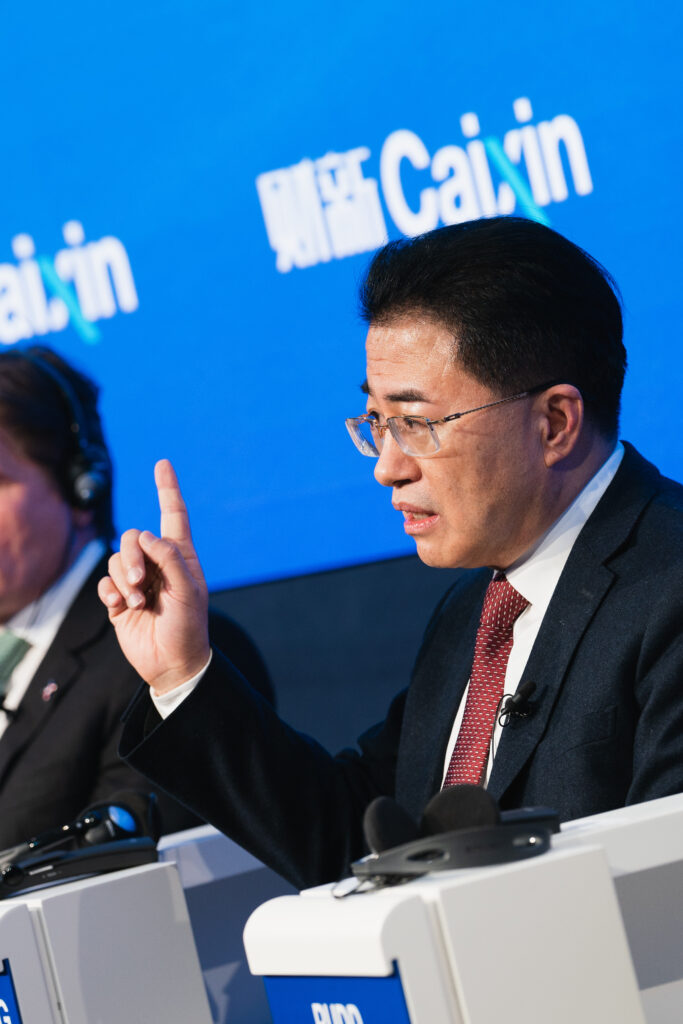
Weng Jieming is the Vice-Chairman of China’s State-owned Assets Supervision and Administration Commission (SASAC), the institution overseeing the 97 companies owned by China’s central government. “World Economic Forum Annual Meeting” by World Economic Forum is licensed under CC BY-NC-SA 2.0.
Since the turn of the 21st century, China has experienced a tremendous economic rise and made significant progress in transitioning to a market economy. State-owned enterprise (SOE) reforms commenced in 1978, however, the country is still home to more than 300,000 SOEs that continue to play a dominant role in the national economy. China’s chronically large state economy prompts the question: What is the current plan of the Chinese government for the country’s state-owned economy? This paper examines the design of the latest SOE reform policies in light of their historical development to find answers, thereby laying some groundwork for understanding Chinese SOEs’ increasing engagement in international commercial activities.
To some extent, China’s Constitution provides clarification: it reads that ‘the state shall uphold a fundamental economic system under which public ownership is the mainstay’ (Article 6) and ‘the state economy shall be the leading force in the national economy’ (Article 7). The state economy’s primacy in China’s national economy is also enshrined in the Chinese Communist Party (CCP) ideology and has been stressed consistently by its leaders—In 2020, President Xi publicly reiterated the paramount significance of SOEs, describing them as the economic and political foundation that support China’s socialist political regime. Accordingly, in practice, Chinese SOEs have played an important role as the primary implementors of government directives and national policies in support of China’s social stability and strategic development, as evidenced by their policy-driven contributions to overcome the COVID-19 pandemic.
Given the entrenched ideological, statutory, and practical significance of SOEs in China’s political-economic system, it is implausible that China pursued or pursues genuine privatisation of its state economy. A first privatisation move, in the second round of SOE reforms (1993-2002), consisted of the ‘Grasp the Large and Release the Small’ programme. It was promoted in the context of the Chinese state economy’s overall desperation caused by SOEs’ disastrous performance in market competition following the 1978 Reform and Opening up. The essence of the programme can be summarised as partial marketisation—preserving the critical industries (i.e., industries essential for national growth and social stability) for continued monopolisation by SOEs and allowing various ownership forms and the privatisation of SOEs that lost grounds to non-state competitors. The programme nearly halved the number of Chinese SOEs and significantly contributed to the general resurgence of China’s state sector around 2008. Substantially, it strengthened rather than weaken China’s state economy and reshaped China’s state economy landscape into a dichotomous system, in which SOEs monopolise in critical industries and compete with non-state firms in others.
Upon assuming the presidency in 2012, President Xi Jinping launched the fourth round of SOE reforms, declaring that China would continue and enhance its reliance on the state economy to advance national development. As a result, the latest round of SOE reforms has continued the core thinking of ‘Grasp the Large and Release the Small’, albeit with a varied policy tailored to the altered foreign and domestic situations, such as the rising Sino-Western tensions and the severe production overcapacity in heavy industries.
The ongoing reform to restructure the state economy consists of massive government-orchestrated mergers between SOEs at the central level (i.e., SOEs owned and supervised by the central government), while preserving critical industries for State-sanctioned SOE monopolies. Simultaneously, the Chinese government has put forth a series of specialised slim-down programmes primarily targeting unprofitable SOEs and SOEs operating in non-critical industries. These programmes aim to boost overall operational efficiency of the state economy and foster robust competition among all forms of ownership in the non-critical industries.
The restructuring reform has proven fruitful: the ‘Grasp the Large’ merger strategy has created 20 world champions in critical industries, including China Baowu Steel Group and China Minmetals Group (ranked 44th and 65th in the 2023 Fortune Global 500, respectively). The strategy has also helped the Chinese government get rid of 14,000 undesired SOEs and enhance the overall financial performance of state economy. However, in the context of the rising Sino-western geopolitical tensions and the Xi Jinping administration’s assertive foreign policies, China’s efforts to reform its state economy following the ‘Grasp the Large and Release the Small’ highlight the likelihood that the reform would facilitate Beijing’s centralised control over a handful of SOE monopolies. This might further existing scepticism that Chinese major SOEs’ international commercial activities serve policy objectives rather than purely commercial goals. This scepticism may hinder the legitimate overseas expansion of Chinese SOEs through, for instance, the enhanced inbound foreign investment screening mechanisms that most developed countries have adopted. This could also make it more difficult for China to normalise relations with old-day economic partners like the UK, EU and Australia.
The working paper “The Latest Round of China’s State-owned Enterprise Reforms: Grasping the Large and Releasing the Small?” can be accessed here.
Tianqi Gu is a PhD candidate at the Sydney Law School. She holds a Bachelor of Laws from Dalian Maritime University (China), a Master of Laws (LL.M) in International Commercial Law from University College London, and a second LL.M from the University of Sydney. Tianqi is the holder of Australian Government Research Training Program Scholarship and Chinese National Scholarship. Her research focuses on Chinese SOE investments in Australia in the context of China’s SOE reforms and Australia’s foreign investment review framework and international investment law. Tianqi Gu can be reached at Tianqi.gu@sydney.edu.au.
In the past 40 odd years, China has experienced sweeping changes on its legal scene. After the denunciation of law and the destruction of legal institutions during the Cultural Revolution, the country set out to rebuild a legal system when the so-called “decade of catastrophe” came to an end. Since then, legislation has proliferated with law drafting skills becoming increasingly sophisticated, courts adjudicating tens of millions cases annually, and the number of legal practitioners growing from 12,000 in 1986 to more than 651,600 in 2022. The concept of yifa zhiguo (依法治国, literally ruling the country according to the law) was formally propounded in 1997. By 1999, the Constitution was amended to declare that “The People’s Republic of China implements yifa zhiguo and builds a socialist fazhi (法治, rule of law) state”. In 2017, the ruling Communist Party of China established a leadership group on comprehensively advancing yifa zhiguo. A year later, a dedicated yifa zhiguo Committee was established within the Party.
What do yifa zhiguo and fazhi mean in the Chinese context? What do the developments in China’s legal arena signify in terms of China’s progress in achieving the rule of law? Looking past the growing body of legislation and the expanding legal profession, the development of law in China since Reform and Opening began in 1978 has travelled through three stages, from laying down rule of law principles as the foundation, to focusing on ruling by law, and finally current efforts to use law as a means of legitimising the Party’s rule and government actions.
In the early 1980s, Chinese legal scholars and policymakers searched for a governance model that would be different from that of the Mao era. They debated about the rule of law and the rule of man. While much of the discourse did not go beyond the traditional tropes of Confucian “rule of (sage) man” on one side and legalist “rule by law” on the other, some scholars introduced and advocated for principles of the Western rule of law, such as the separation of powers, the supremacy of law, equality before the law and Nulla poena sine lege (no penalty without law). The adoption of fazhi (法制, literally a system of law, legal system), instead of fazhi (法治, rule of law), was a compromise between the two broad camps of “rule by both law and man” and “rule of law”. Considering that at that point in time the country was standing on the rubble of the Cultural Revolution, it was probably pragmatic to prioritise building a system of law, which would provide a tangible framework for the rule of law.
Worth noting is that, despite the use of the term fazhi (法制, legal system)instead of fazhi (法治, rule of law), the 3rd plenary session of the 11th Central Committee of the Communist Party in 1978 and the 1982 Constitution adopted key principles of the rule of law. The 3rd plenary session vowed to “make law stable, consistent and with great authority”, to ensure compliance with law, due independence of courts, and equality of all persons under the law. The 1982 Constitution enshrines all the above principles – the supremacy of the law, equality before the law and judicial independence. The constitutional provisions were skeletal, and the Constitution was (and still is) more of a political manifesto than an enforceable piece of legislation, but the provisions manifested the government’s commitment to the key principles, enshrined in the country’s supreme legal document. A blueprint was drawn, allowing future developments to gradually realize the rule of law.
Post-1989 China curbed the tendency to “Westernise” and reiterated the four cardinal principles for ruling the country, namely socialism, the dictatorship of the proletariat, the leadership of the Party, as well as Marxism, Leninism and Mao Zedong Thought. The Party searched for a theoretical development for the role of law, and the idea of yifa zhiguo was introduced. The 1999 amendment to the Constitution declared the goal of building a “socialist fazhi (法治, rule of law) state”. The two Chinese characters for fazhi (法治) together mean “law governs”, an essence of the rule of law. The official Chinese translation of the phrase is “socialist rule of law”.
Fazhi is also a shorthand reference to yifa zhiguo. The term yifa zhiguo is relatively straightforward; it has usually been translated as “governing the country according to law” or “law-based governance”. A series of laws were passed to restrict government’s administrative powers, including allowing litigation against certain government actions, imposing procedural requirements and limits on administrative penalties and licencing, and providing for state compensation. These laws aimed to correct and improve previous practices that often had no legal basis, yet it was the bureaucracy and not the ruling Party that was subject to the law. At the same time, the idea of yide zhiguo (以德治国, ruling the country by virtue/morality) was highlighted as a principle parallel to yifa zhiguo. Therefore, socialist rule of law was in essence rule by law, wherein law was but one instrument to govern the country.
Since the 2010s, China’s legal reform intensified, as the Party devoted more energy to “construct a socialist fazhi system with Chinese characteristics and to construct a socialist fazhi state”. The Party has become more visibly active in state affairs, increasingly invoking the yifa zhiguo narrative. Significantly, the leadership of the Party was written into the Constitution in 2018, and it has since appeared in a number of amended or new statutes. The 2018 amendment to the 1982 Constitution therefore enshrines the Party as the legitimate ruler of the country and creates the legal basis for its dominant position. Another important change was the legalisation of previously unlawful means of restricting personal freedom. Most notably, the often-criticised shuanggui (双规, two specifics) which had been used by the Party’s disciplinary committee to detain suspected corrupt officials and witnesses extra-legally, was authorised by the Supervision Law of 2018.
China’s 40 odd years of legal development started with aspiration and foundational principles for the rule of law. Post-1989 it developed to become rule by law, and eventually turned towards using law to legally sanction the Party’s rule.
The article “Shifting Meanings of Fazhi and China’s Journal toward Socialist Rule of Law” (draft available here) was published in the International Journal of Constitutional Law, Vol. 19 Issue 5.Ruiping Ye is a Senior Lecturer in law at Victoria University of Wellington, New Zealand. Her research interests lie in the areas of comparative law, the Chinese legal system, law and culture, land law and aboriginal land tenure.
Laura Formichella and Enrico Toti interviewed Jerome A. Cohen
Professor Cohen, more than forty years have passed since the book you edited Contemporary Chinese Law: Research Problems and Perspective, it was exactly 1970. The four hundred pages volume contains important contributions on themes concerning Chinese law. Specifically, your paper “Chinese Attitudes Toward International Law – and Our Own” reconstructs the theme and provides significant reflections and synthesis on the topic. From the 1970s to today, how have Chinese attitudes toward International Law changed?
I started to follow China’s approach toward international law just when the Cultural Revolution began. Changes in the theory and practice of international law in China since 1966 have led to an unthinkable development, of which we have only gradually become aware. Yet the PRC [People’s Republic of China] had demonstrated a revolutionary outlook toward the international community from the time of its establishment in 1949. This was in obvious response to the world community’s rejection of China’s new revolutionary government. If the United States had recognized and established diplomatic relations with the PRC from the outset of the communist regime, we might have moderated its hostility. For our own domestic political reasons, however, we did not. The United States also opposed the PRC‘s entry into the United Nations under any formula. Thus, the United Nations rejected the PRC as the lawful representative of the Chinese people, despite its control of the Mainland and despite the fact that the ROC [Republic of China] authorities had fled from Mainland China to Taiwan. The government of the ROC held onto the Chinese seat in both the Security Council and the General Assembly, even though it lost the civil war. Moreover, immediately after the United Nations rejected the PRC, when the United States decided to pursue the retreating North Korean forces into North Korea and possibly eliminate the buffer state on China’s border, the entry of “Chinese People’s Volunteers” into the Korean conflict served to enhance the PRC’s revolutionary rhetoric against the existing world organization. The United Nations, not only the United States, became China’s enemy in Korea. Even after the Korean Armistice in 1953 and the PRC’s adoption of “the five principles of peaceful coexistence” and a more moderate foreign policy, the UN continued its exclusion of Beijing and Chairman Mao did not abandon the hope of establishing an international organization of developing countries that might rival the United Nations. China’s distrust of the Western-controlled United Nations was matched by its distrust of the international law reflected in UN practice. Moreover, most major Western countries still refused to recognize and establish bilateral diplomatic relations with Beijing. In that era, PRC views of international law were shaped by the Soviet Union’s experts, just as China’s domestic legal developments followed the Soviet legal model until the Sino-Soviet split of the late 1950s and the radicalization of the PRC’s domestic legal system.
The most distinctive of the theories of international law imported from the Soviet Union stated that there were really three types of international law. There was the bourgeois view of international law, to regulate relations among bourgeois states, there was the international law to govern relations between the socialist world and the bourgeois world, and then, there was socialist international law, to govern relations among the socialist states.
Certainly, China’s leaders had good reasons to be cynical about American assertions of international law. During the PRC’s first decade, the United States took many illegitimate, covert actions against China in an effort to undermine the new regime. For example, it flew non-communist Chinese and American CIA agents into China to help organize unrest. Also, after training expatriate Tibetans in mountain warfare in Colorado, it dropped them back into their homeland to stoke the fires of resistance. In mid-1957, China entered a more radical phase at home and abroad, one that culminated in the chaos of the Cultural Revolution’s earliest years, 1966 to 1969, and resulted in the alienation of virtually every significant country in the world. In that period, China’s practice of international law reached its nadir, especially with respect to violating the rights of foreigners and foreign diplomats in China. Fortunately, such institutional and ideological non-conformity began to ebb with the end of the most violent portion of the Cultural Revolution in the autumn of 1969, when Beijing began a renewed effort to enter the UN and to complete its normalization of bilateral relations with the major powers. Yet despite Canada’s groundbreaking establishment of diplomatic relations with Beijing in 1970 and the PRC’s UN entry the following year, China’s leaders, still in the midst of fierce internal political struggles in the waning years of Chairman Mao’s rule, revealed a continuing mistrust of UN institutions and commonly understood international law. A personal anecdote illustrates this point. On June 16, 1972, I had the good fortune to have dinner with Premier Zhou Enlai. I sat on his left and John Fairbank, the great historian of China, sat on his right. We were both from Harvard and had been members of a Harvard-MIT faculty group of China specialists who, immediately after Richard Nixon’s 1968 election, had given the President-elect and his new assistant, our erstwhile colleague Henry Kissinger, a memorandum proposing steps towards a new American policy toward China. Since the first half of this session seemed to go well while reviewing Sino-American relations and the Vietnam war, I decided to ask about the Chinese Government’s current attitude toward international law. I introduced the topic by suggesting that the PRC, having just become a prominent participant in the UN with a permanent, veto-wielding seat in the Security Council, should also consider sending an expert to serve as a judge on the International Court of Justice (ICJ) in the Hague. That provoked the loud laughter of all the Chinese officials, who plainly thought it a ludicrous proposal. Why, they wondered, should the PRC want to assume a seat on the fifteen-member ICJ, where they were sure most judges would be prejudiced against an Asian, Communist state and would disagree with its views? Moreover, as has subsequently become even clearer, the PRC has traditionally mistrusted settling international disputes through adjudication, arbitration and other forms of third-party decision-making. Despite China’s millennial practice of mediating domestic disputes, even mediation’s more limited third-party participation in international dispute resolution has been shunned by Beijing. I held my ground, arguing that, for permanent members of the Security Council, an ICJ judgeship is one of the perquisites of being a world power and that the PRC should not pass up the opportunity. It took more than another decade before Beijing finally posted to the ICJ the first of what has become a succession of very well-qualified Chinese judges. However, the process of PRC participation in international adjudication is not complete. Like the United States, China has not accepted the compulsory jurisdiction of the ICJ, nor has it accepted participation in the relatively new International Criminal Court, although it has placed capable representatives on certain ad hoc international criminal tribunals. Moreover, Beijing generally insisted that countries that wished to establish diplomatic relations with it had to acknowledge, to varying extents, that Taiwan should be deemed to be part of China. The PRC’s October 1971 replacement of Taiwan in the UN was the dramatic moment, of course, and would not have been possible if Beijing had not assured all and sundry, at least implicitly, that it would henceforth observe universal standards of international law and practice. Beijing wanted to finally get inside the big tent, and to do so it had to indicate that it would play by the rules.
Other countries had decided that the only way to get China to play by the rules was to finally admit it into the big tent. Thus, the PRC began the process of moderating its statements and its practices relating to international law, and trying not only to become a participant in, but also a shaper of, international law in various forums.
The book that Hungdah Chiu and I did, “People’s China and International Law”, reviews the earliest years of this crucial history. To be sure, a big country with the PRC’s radical tradition could not fundamentally change direction in a day, and, as the following story suggests, the difficulties encountered in the process should not be underestimated. Finally, at least until the mid-1970s, the impact of the Cultural Revolution on China’s educational, research and bureaucratic systems had left many PRC diplomats and officials ill-equipped to cope with the legal demands of the new situation. I remember another personal anecdote: in 1973, the PRC’s permanent representative to the UN, the very able Ambassador Huang Hua, told me how embarrassing it was that, for lack of a qualified official to fill Beijing’s seat on the UN General Assembly’s Sixth Committee, which is responsible for legal affairs, he had to ask his wife, who was only trained in economics, to do so! Almost fifty years later, the situation is very different. The PRC has developed impressive expertise in the field of public international law. Its law schools and political science departments offer detailed instruction in the subject by well-trained specialists, many of whom have done advanced study in the world’s leading academic institutions and some of whom have been invited to teach there. These scholars and their colleagues at the country’s many research and policy organizations often publish sophisticated analyses in books, academic journals and media essays, not only in the Chinese language but also in English and other foreign languages, and are active participants in non-governmental international law conferences and dialogues. In addition, they frequently provide advice to various departments of the Chinese government.
Contemporary PRC officials and diplomats are products of this educational system and have developed their legal expertise in sundry areas of international responsibility. This is apparent from their activities while representing their government in many international fora as well as while posted at home to the Law and Treaty Division and other bureaus of the Ministry of Foreign Affairs as well as other agencies within the government, including those that deal with foreign economic and business issues. Some also have honed their credentials while employees of the UN or other public and private international organizations. Together, this impressive and increasingly large group of specialists brings to bear an important body of international legal knowledge and a potential for acting as a restraining influence upon the exercise of untrammeled official power. Of course, as in the United States and other countries, these experts in and out of government often disagree among themselves about the proper application of international law to inevitably complex and controversial problems, and in any event their views are often overridden by more powerful official decisionmakers who may not be attuned to international legal considerations or who give greater weight to political, military, economic and other factors. Because of the PRC’s unusually repressive domestic political climate during the Xi Jinping years, to an unquantifiable extent the opportunities for Chinese international law experts to influence government policies and actions are undoubtedly not as great as those enjoyed by counterparts in foreign democracies. Certainly, discretion is the better part of valor when Chinese experts state their views in public. To be sure, there is greater scope for expression when advocating a future course than when criticizing decisions already taken. Yet, Chinese colleagues tell me that today, whether as official or consultant, one has to tread especially carefully when offering opinions, even within the confidential confines of government discussions prior to the making of decisions.
Professor Cohen, a second question on an equally important topic which is key to understanding many other themes. How is the World Trade Organization, as an international forum that seeks to provide a single platform for member states to negotiate bilaterally and multilaterally and aims to foster the spirit of a new international legal and economic order, understood and utilized in China?
Those looking for evidence to encourage the belief that the PRC will increasingly comply with the current rules-based international order usually take heart from its participation in the World Trade Organization (WTO). That participation was preceded by both a long period of intense negotiations concerning the extraordinarily demanding terms imposed upon Beijing’s entry and Beijing’s simultaneous prodigious effort to revamp its laws, regulations, and institutions in order to comply with those evolving terms. Since its entry in 2001, Beijing has become an accepting and active member of the WTO system, at least with respect to dispute resolution. Those who, because of Beijing’s long-standing aversion to the use of arbitration to settle international disputes between governments, predicted that the PRC would never take part in the WTO’s formal dispute resolution processes have been proved wrong. After a few years of learning the procedures and substance of WTO arbitration, the PRC has become a vibrant participant in the system. It wins some cases and loses others but plays the game! To be sure, the enthusiasm of Chinese spokespersons for the process appears to have diminished a bit of late, and they continue to claim that Western, especially American, experts frequently “outlawyer” them. Yet, ironically, it has been the United States Government under President Trump that has recently posed obstacles to WTO arbitration by opposing the appointment of new appellate arbitrators. The PRC has also shown signs of warily moving toward participation in the World Bank’s institution for the arbitration of disputes between foreign investors and host governments – the International Center for the Settlement of Investment Disputes (ICSID). And, of course, Beijing, in addition to its court system, has long supported a vast and complex network of domestic arbitration institutions for dealing with trade, investment and other commercial legal disputes, including those directly and indirectly involving foreign business. The PRC’s recent successful establishment of the multilateral Asian Infrastructure Investment Bank (AIIB), a welcome supplement and possible rival to the World Bank, should also add to Chinese sophistication and support for international dispute resolution. More uncertain and controversial are Beijing’s many ambitious bilateral One Belt, One Road (OBOR) projects, also grouped under the name Belt and Road Initiative (BRI), which represent a more obviously self-serving political-economic strategy. The PRC evidently hopes that the BRI will benefit from the services of new Chinese dispute settlement institutions, such as Beijing’s recently-established international commercial courts. As Susan Finder has written, this appears to be part of an effort to «move the locus of China-related dispute resolution from London and other centers in Europe (or elsewhere) to China, where Chinese parties will encounter a more familiar dispute resolution system». It would be surprising, however, if many of the PRC’s BRI partners with significant bargaining power accept dispute resolution in China instead of in more neutral I, if not their own. Certainly, the PRC, as soon as it established a basic environment for attracting foreign direct investors, insisted that they settle relevant disputes in China rather than in their homeland. Many topics deserve scrutiny, including not only the PRC’s respect for multilateral treaties other than the WTO and UNCLOS agreements, such as those international labor treaties that it has selectively chosen to adopt, but also its adherence to bilateral agreements. The latter topic often receives less attention than the former.
In some cases where bilateral agreements have allegedly been more informally or non-transparently made, it is not possible to confirm either the details of the alleged commitment or the basis for the claim that the PRC has failed to honor it. One example (from outside the area of civil and political rights) is the charge by the United States Government that in 2015 Xi Jinping promised not to militarize contested islands in the South China Sea, yet nevertheless proceeded to quietly do so.
Another is the American charge that, also in 2015, the two governments agreed not to engage in cyberhacking of the other side’s commercial enterprises but that Beijing, after briefly suspending such attacks, subsequently resumed them. In some cases where China has formally committed to bilateral agreements, its implementation has been questionable. An even more recent example of Beijing’s highhandedness In a bilateral consular dispute occurred when in late 2018 it famously detained two Canadian nationals in apparent retaliation for Canada’s cooperation with an American request to extradite a major Chinese business executive. The hapless detainees, seemingly held as hostages more than legitimately suspected criminals, were not given the full protections prescribed in the Sino-Canadian consular agreement. Although minimal consular access to each of them was belatedly permitted, they both continued to be kept incommunicado and denied access to required legal assistance, ostensibly on the basis of Ministry of State Security suspicion that they represented threats to national security. They were also reportedly subjected to all-night lighting in their detention cells. It is unfortunate that, following their ultimate release from illegitimate detention, these detainees have not responded to calls for them to reveal further details of their suffering. Since the end of the 19th century, when China began its process of modernization, the Western expression “rule of law”, in Chinese 法制 fǎzhì, has continued to spread among the Chinese and in academic circles. There is now a strong desire for the rule of law to take hold and there remain many expectations.
However, China’s Five-Year Plan for the Construction of the Rule of Law, between 2020-2025, contains a notion that departs from that conceived by the United Nations, the United States, and the European Union, particularly with regard to this Communist regime’s rejection of the separation of powers and the independence of the judiciary and its completely different conception of human rights and democracy. On this issue too, we would like to hear your views. Let us go to the heart of the matter.
The subject is topical and of great interest. I have spoken on numerous occasions on this sensitive issue and have been able to note the difficulty of Chinese scholars to make analyses free from the pressures of the Communist Party. Happily, I was surprised and pleased by the formidable essay of Professor Ruiping Ye, when I was invited by the International Journal of Constitutional Law to comment on her disquisition (our blogpost). She is not based in the PRC but in the law faculty of New Zealand’s Victoria University of Wellington and is therefore literally remote from the conflicting pressures to which Chinese scholars of constitutional law are generally subject. Based on my knowledge, I can attest the accuracy of her characterizations and analysis. The periodization that the author Imposes upon the post-Cultural Revolution PRC determination to replace Chairman Mao’s cruel chaos with an appropriate legal system seems correct. The 1978-89 era was an age of great, groping, intellectual ferment. There was a broadly shared felt, if inchoate, need to work toward the goal of subjecting “government,” including the Communist Party that controlled the government, to the law that was gradually being enacted and that would embrace concepts such as “equality before the law” and “judicial independence”. Even after the political fall of the reformer Hu Yaobang as formal Party leader, his successor was also a reformer, the able and dynamic Zhao Ziyang, who continued the vaguely articulated quest to find a way to limit the power of the Party and produce “government under law”. Zhao proposed disentangling the Party from day-to-day state operations, confining it to policy formulation, selection of personnel, and other general matters. If successful, this effort would have developed the rule of law in China. As Professor Ye recognizes, «Given that China was at the beginning of rebuilding a legal system, fundamental rule of law principles could not be realized overnight, but the blueprint was drawn and the foundation was laid, upon which details could be added and structures could be built». Sadly, this was not to happen. The military massacre of at least hundreds of peaceful protesters that took place on June 3-4, 1989 near Beijing’s Tiananmen Square ended the possible reform era. Threatened with popular overthrow, the Party’s suddenly revamped leadership, after actually placing the newly-deposed Zhao Ziyang under house arrest for what would be the last sixteen years of his life, promptly abandoned its flirtation with Westernized “government under law”. In its stead, it chose what may be encapsulated as “law under government”, a path much more congenial to the imperial traditions of the “Central Realm”. Indeed, there is a marked similarity between the Party-state’s enthusiastic embrace of “rule BY law” and the legalist philosophy of government adopted by China’s first emperor. Over two thousand years ago, his Qin dynasty unified the country through uniform application of laws authorizing unchallengeable harsh punishments.
Ironically, there was during this second post-1978 period, which can be seen as lasting roughly from mid-1989 until the 2012 ascension of Xi Jinping as Party General Secretary, an enormous amount of apparent legal progress. It featured constitutional amendments, legislation on many topics including administrative law and government information disclosure authorizing the right to sue officials in circumscribed circumstances, other procedural and institutional improvements, development of an increasingly sophisticated judiciary and legal profession, and a huge expansion in the number of law schools and university legal departments. The prime motivation for these ambitious achievements was the Party leadership’s desire to successfully develop a “socialist market economy” and reap the benefits of cooperation with the world community, as symbolized by PRC acceptance into the World Trade Organization.
Yet this turn toward the new and attractive slogan of “ruling the country according to law” was in fact a betrayal of the hopes for a genuine “rule of law”. Some of these achievements did put certain restraints on the conduct of the official government bureaucracy, as imperial law did too, but in neither case did law restrain the ruling power – in our day the Party leadership and, until the twentieth century, the emperor. Another noteworthy point is the ostensible revival of respect for Confucian philosophy. Until recent years, the country’s Communist revolutionaries, like other twentieth-century Chinese radicals and reformers, condemned Confucius and his disciples as the fount of the “feudalism” that had consigned the once great imperial “Central Realm” to the “century of humiliation” that began, according to Party scriptures, with the Opium War of 1839 and lasted until Communist “Liberation” in 1949. Recognizing from historical experience that the Chinese, like others, are best governed not by coercion alone but by the ruler’s parallel resort to ideology and moral suasion, and seeking to respond to the nation’s sagging faith in Communism, the Party has lately sought to broaden its appeal by invoking a selective version of Confucianism to serve, like the legal system, as another instrument of political control. The third and present period in the post-1978 contest between “rule of law” and “rule by law” began, as Professor Ye notes, just over a decade ago and moved into high gear in 2012 when Xi Jinping assumed Party leadership and shortly thereafter also became both President of the state and Chairman of the National Military Commission. Although the current era might be characterized as essentially a further application of the principle of “governing according to law”, i.e. “rule by law,” that dominated the second stage, the recent changes wrought in the name of “doing everything through law” have been so distinctive as to warrant separate attention. Surely this is Xi Jinping’s attempt to complete the process, already well under way, of cloaking Party monopolization of government power with the mantle of legality. It is, of course, a far cry – indeed at the opposite end of the spectrum – from the hope of the long-deposed Zhao Ziyang to largely separate the Party from the government. Three bold constitutional amendments have brought the Party closer to integration with, and almost congruence with, the government than ever before. The most publicity-generating amendment was the abolition of the two-term limit for the office of the nation’s President. The presidency has gradually come to rival the prestige, if not the power, of the Party General Secretary, for which there is no term limit under Party rules. This amendment legally formalized congruence at the very top of the Party, government, and military hierarchies. To ensure legal confirmation of the principle of Party control over the government, the Constitution was further amended to insert that principle into the document’s body, rather than allowing it to rest, as before, in the oft-perceived ambiguity of the Constitution’s preface. And, to leave no doubt that this principle would be implemented more thoroughly than ever, the third constitutional amendment established a fourth branch of government under the National People’s Congress (NPC). It was designed to consolidate in real life the Party’s control over the other three branches and even over the theoretically all-powerful NPC. The new National Supervisory Commission (NSC) is the most significant innovation yet made in the Soviet government model imported from the late USSR by all other “socialist” states, past and present. It has been endowed with the power to coerce not only all of the Party’s 96 million members but all public officials and others who exercise public functions broadly construed. The NSC builds upon, and shares offices, personnel, and practices with, the Party’s legally unauthorized “discipline and inspection” system, which has played a key role in enforcing the Party’s will among Party members through surveillance, incommunicado detention, and torture so effectively that many targets committed suicide after being summoned. The NSC is considered in fact to be more powerful than the other, pre-existing branches of government – the executive branch including the public security force, the procuracy or prosecution office, and certainly the courts. Although nominally required to report to the NPC like the other branches, the NSC, as the Party’s key legallyauthorized official suppressor of not only corruption but also violations of Party discipline and state law in any respects, is widely thought to be more powerful in affecting individuals and practical affairs than even the NPC and its staff.
In these circumstances, it is easy to conclude that the Party has obliterated prospects for the “rule of law” even while endlessly hijacking its name in order to impose “rule by law.”
How long is the current era likely to endure?
The circumstances surrounding the decisions of Deng Xiaoping to end Chairman Mao’s “class struggle” in 1978 and of Chiang Kaishek’s heirs to peacefully democratize his Leninist-type totalitarian regime on Taiwan during the decade beginning 1987 were very different from those that are likely to prevail for the foreseeable future in twenty-first century China. Yet history is notoriously adventitious, China’s progress under Communism has witnessed many swings of the pendulum, and potential “revolutionary successors” to the ill-fated Zhao Ziyang, prepared to pursue a liberalizing path, amply exist among today’s dissatisfied but suppressed Party elite.
This interview is a part of a volume (in Italian) published by Edizione Scientifiche Italiane and available for purchase here.
Laura Formichella teaches Chinese law at Tor Vergata University of Rome, Law School. She obtained her PhD with a thesis titled “Sistema giuridico romanistico. Unificazione del diritto e diritto dell’integrazione” from Tor Vergata University, where she is a researcher, spending long periods of study at China University of Political Science and Law in Beijing and other Chinese universities. She is the author and editor of numerous publications on Chinese Law and translations into Italian of the most important laws of the PRC. She has participated in numerous national and international conferences as invited or plenary speaker.
Enrico Toti teaches Chinese law at Roma Tre Law school. He obtained his PhD from Tor Vergata University, spending long periods of study and research at the China University of Political Science and Law in Beijing and other Chinese universities. In 2021 he published the monograph Diritto cinese dei contratti e Sistema giuridico romanistica. Tra legge e dottrina. He is the author and editor of numerous publications on Chinese Law and translations into Italian of the most important laws applicable in the PRC and founder of the website Cinalex.it. He is Visiting Professor at the School of Law of the Shanghai International Studies University.
A new paper by W. Gregory Voss and Emmanuel Pernot-Leplay
Cross-border data transfers are a sensitive topic in many jurisdictions, even more so when China is concerned. The EU and the U.S. regulate those flows in very different ways, and China just issued rules showcasing its own specific approach, mixing privacy and national security together, which have become a compliance hurdle for many multinational companies. Our study observes holistically the regulation of personal data flows both into and from China.
Why and how the USA and the EU regulate data flows to China
In both the EU and the USA, China is often seen as an untrusted destination for data exports because of the risks that would exist for both individual rights protection and national security. These concerns are addressed by restricting the cross-border data transfers to China, but it’s done differently in the EU and the USA.
The USA does not have general data transfer restrictions, but it has taken specific actions for national security and user privacy reasons that limit data flows to China. Those are best exemplified by the Grindr and TikTok cases, both on national security protection grounds, for fear of access to the data by the Chinese government and potential blackmailing against nationals of the USA in a position to obtain access to sensitive materials. This is a regulatory risk for Chinese companies, which has sometimes resulted in them storing data in the USA. Because the USA currently lacks an omnibus data privacy law covering data flows, unlike the EU and China, data privacy restrictions cannot serve as the grounds for such procedures, and therefore the USA must resort to national security rules, instead. Nonetheless, this solution remains impractical and used only for high-profile cases. In the future however, proposed data privacy legislation in the USA may impose requirements on transferring personal data to China, resembling restrictions in other major regions.
On the other hand, the EU has strong data privacy rules in the GDPR, including on cross-border data transfers, but by virtue of the division of powers between the EU and its component Member States, national security issues are left to the prerogative of each of the Member State. The GDPR sets several conditions and safeguards to be applied to data transfers for them to be legal. The main ones are the adequacy decision on the one hand, and standard contractual clauses from the European Commission on the other. The latter provide a legal framework that obligates both the data exporter and the data importer (the entity outside the European Economic Area receiving the data) to protect the personal data in accordance with GDPR principles. An adequacy decision, however, means an entity can freely export data to the country that has received this adequacy decision from the European Commission, which greatly facilitates business operations for companies and economic exchanges between the two jurisdictions. But, in the case of China, such decision is currently virtually unforeseeable. This is due to the fact that the European Commission assesses issues such as the rule of law in the destination country in deciding adequacy. Because of the structural specificities of its political and legal system, China is unlikely to meet this first condition. Companies can still export data to China, but the exporting and receiving parties will need to commit to the standard contractual clauses.
China now restricts cross-border data flows to protect both personal data and national interests
Whereas the USA acts on outbound data flows using mainly national security arguments, and the EU focuses on data privacy, China combines both rationales in its own approach.
To provide contextual clarification, it is pertinent to underscore that the progression of data protection legislation in China has followed a peculiar trajectory. At first, there were only a few rules targeting specific sectors, with lightweight protections. This resembled the US-approach and favoured a free use of personal data without many safeguards and rights for the individuals. However, faced with the increase of privacy abuse threatening to cause social unrest, China gradually moved towards a more protective approach and started the legal transplantation of certain rules and concepts from the EU, offering more protection to Chinese consumers against misuse of their data by the private sector. As one may expect protection of the citizen against data collection by the government remains embryonic, due to the specificities of China’s political and legal system.
This progress culminated in the Personal Information Protection Law (PIPL) from 2021, sometimes dubbed as China’s GDPR, which also showcases China’s own approach to the regulation of personal data use, especially on cross-border data transfers through mechanisms implemented in 2023. In a syncretic manner, China has indeed combined data privacy and national security concerns into its mechanism to restrict data flows, impacting both domestic and international companies.
Under the PIPL, companies seeking to transfer data outside of China have possibilities: certification, standard contractual clauses (SCCs), and security assessments. These mechanisms aim to ensure that personal data remains protected and that its transfer aligns with the law’s requirements. The certification mechanism offers a route for intra-group data transfers (akin to Europe’s Binding Corporate Rules (BCRs)). However, its adoption may be hindered by complexities and potential costs. The PIPL’s SCCs provide a standardized framework for data transfers, mirroring similar processes under GDPR. However, unlike in the EU, an organization can use those two systems only under a threshold that may easily be crossed by bigger corporations. Above it, and for more sensitive data transfers, a state-led security assessment is required. This assessment evaluates not only data protection levels but also considers China’s national security, economic stability, and political implications. This is especially the case for organizations deemed critical information infrastructure operators, and is a Chinese specificity that does not exist in either the EU or the USA. Because of the large room for discretionary interpretations, favoured by the vague terminology used in the requirements, this assessment puts multinationals looking to take data out of China in a grey zone, with potential high impact on their business operations. However, it is a risk that China does want to mitigate.
China’s data localization rules are robust and align with global trends in privacy protection on one hand, but feature significant specificities on the other, which leads to uncertainty for companies but provides more maneuvering room to authorities looking to protect China’s interests. As the EU’s GDPR influenced several other jurisdictions’ data privacy rules, time will tell if China’s own approach on data flow screening will be mimicked by other countries, and if the intertwining of data privacy with national security will confirm a new trend.
W. Gregory Voss is an Associate Professor at TBS Business School (formerly Toulouse Business School). His research focuses primarily on technology law and fundamental rights (e.g., privacy & data protection).
Dr. Emmanuel Pernot-Leplayis a principal data privacy specialist at Schneider Electric. He holds a PhD degree in Comparative Law from Shanghai Jiaotong University and writes on comparative law and policy, in the fields of data privacy, digital policy and their implications for national security.