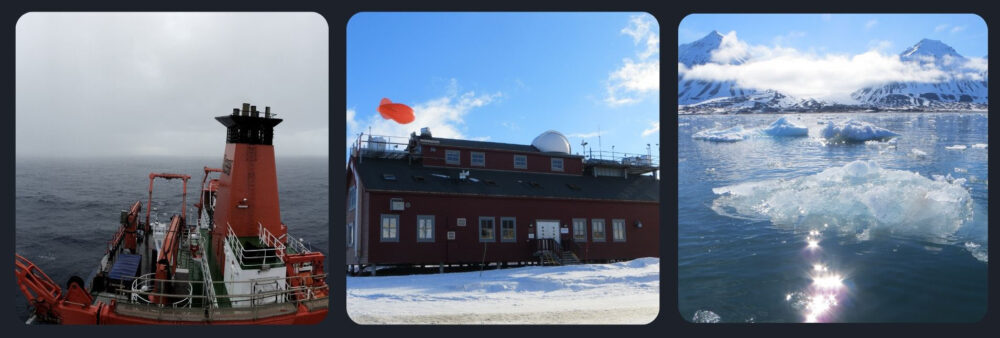
Time to Say Goodbye – or: How You Don’t Just Forget 5 Weeks in the Arctic

After a good five intense weeks of the COMPEX campaign, the moment had finally come: time to say goodbye. Sounds a bit dramatic – and honestly, it was. But before we said our farewells, we gave it everything we had one last time. And what a finale it was! Flight number 15 was completed. Fifteen! No other (AC)³ airborne campaign in the Arctic has ever achieved that many research flights. We’re pretty proud of that.
Of course, this success didn’t come out of nowhere. Two incredibly dedicated research teams, a whole lot of teamwork – and yes, we admit it – a little bit of help from the weather fairy certainly played their part. But let’s start from the beginning.
Yesterday, we carried out our second lead experiment northwest of Svalbard. After using the first attempt to test whether and how our idea would work, we now had the chance to refine and improve everything. And that’s exactly what we did. With great commitment, ambition, and a fair amount of flexibility, the plan was adjusted just in time – supported by near real time satellite imagery. Teamwork at its best!
After a four-hour flight, the crew returned exhausted but happy. And what better way to wrap up such a day than with a closing party at Mary Ann’s – complete with pizza, billiards, and lots of laughter.
While part of the team had already started packing their bags, a small group stayed for one extra day of the campaign. We made the most of the remaining flight hours – and just like that, we reached number 15. Mission accomplished!
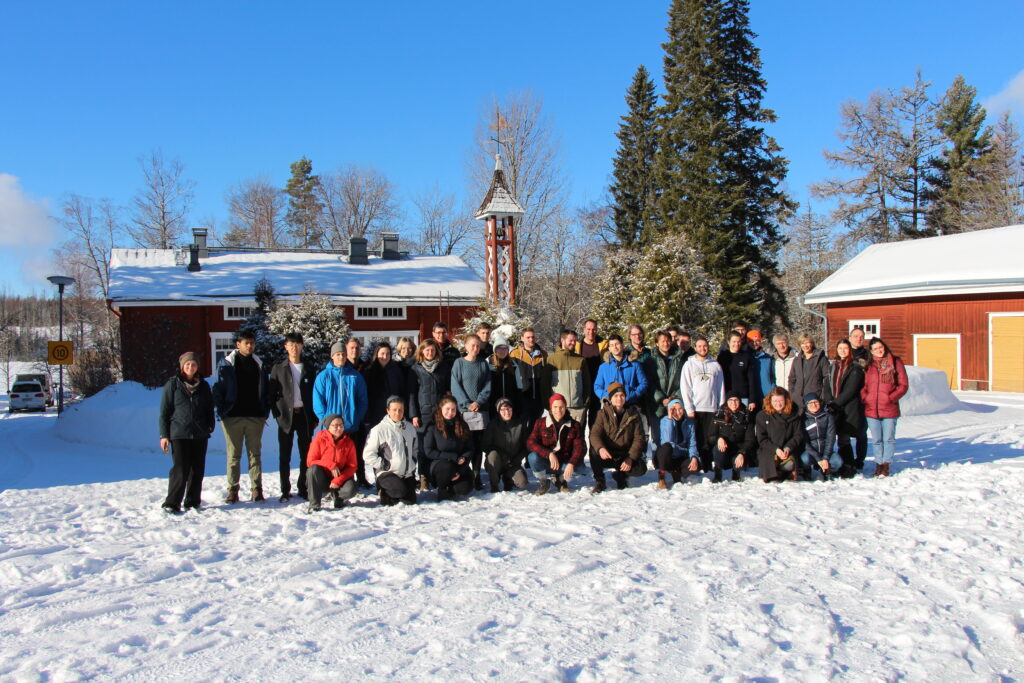
This time, however, saying goodbye was especially hard. For the ground crew, it wasn’t just the end of the campaign, but also the end of an intense time spent together. And yes, it got emotional. After weeks of shared work, challenges, and experiences, a few tears were shed.
But above all, one feeling remains: gratitude. We are incredibly thankful to have been part of this amazing campaign. We’re heading home with valuable experiences, renewed motivation, and friendships that will last a lifetime.
Goodbye, Arctic! We hope you’ll be around for a long time to come – because without you, things would be pretty dull.
And to you, our dear blog readers: thank you for your interest and for following our journey.
Yours,
The COMPEXies

The cursed 13th flight — drama, foosball heroes and a happy ending

Some days just have a will of their own. Our “cursed 13th flight” had kept us on our toes for a while: repeatedly scheduling it, replanning, then shoving it back in the drawer — and yet: team spirit stayed unbroken. We spent the evening at Mary Ann’s with delicious Thai food. Eight teams battled in an epic foosball tournament, and the decision was as close as it was exciting: Uni Leipzig and AWI took the win. Gooooal!
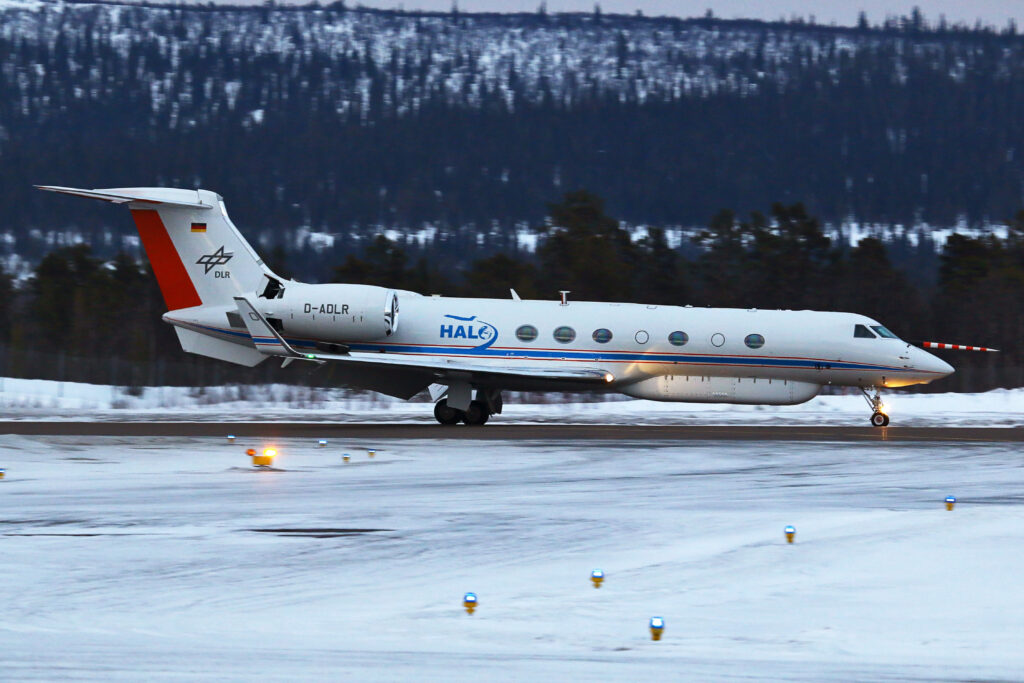
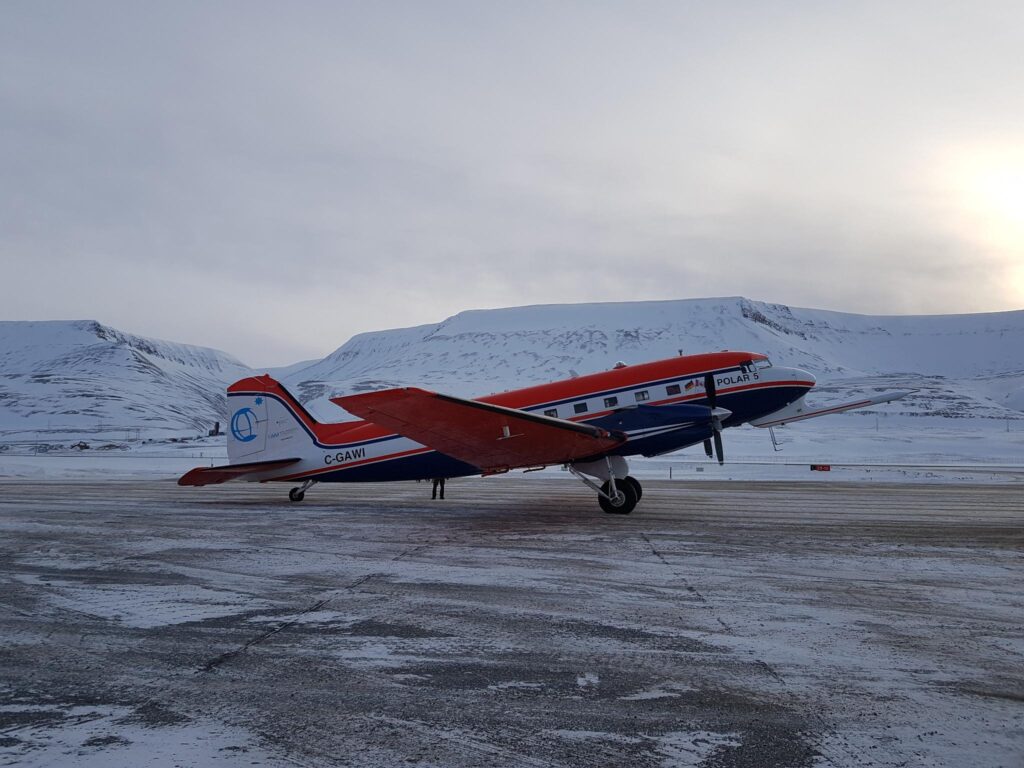
When the next day was canceled again for weather and flight reasons, we made good use of the time: students from UNIS came to our hangar. The tour through Polar 5 was a highlight for many — no wonder, that beautiful plane is simply magnetic. Over coffee, cake and waffles we exchanged experiences, told stories, and in the end our guests left with big, wide smiles. Mission “spread good vibes” accomplished.
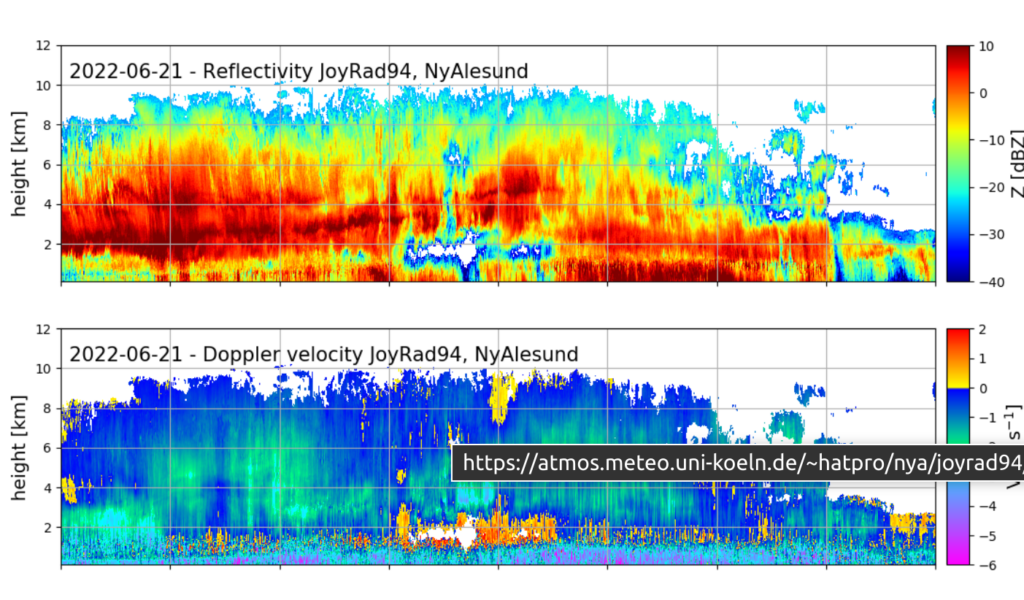
And then — drumroll — finally: yesterday the cursed 13 could be flown! Joy everywhere, Polar 5 back in the air, and a bit of work routine returned for us. Early in the morning we headed toward Kongsfjord by Ny-Ålesund: the goal was to map the spatial variability of the clouds. Several cross-sections perpendicular to the fjord helped us test our models. Two-layer clouds with tops at about 1000 m and 2300 m, wave-like structures — observed from the aircraft and from the radar in Ny-Ålesund, and best of all: our models had predicted that pretty well. Scientist’s heart, what more could you ask for?
On the ground the next flights were still planned down to the minute — even with alternative options ready until the last moment. All the more painful was the news the next morning: no flight. Not because the weather was entirely against us — rather the crew wasn’t fit. And you can’t force that. Mika is heartbroken and stands sadly beside Polar 5, which glints mystically in the fog. We can’t blame him.
But whining doesn’t help — we stay creative. Four new, brave Mermaids received their certificates — with pride, respect and a big round of applause. Congratulations!
And most importantly: we keep planning. Until the end. Every option is pulled, strategies refined, ideas forged — so we’re ready as soon as the crew is fit. Optimism remains our fuel. Chakka!

And once again, the Arctic is thawing…

You’d think we’d be used to it by now—but no, the Arctic still manages to surprise us. After a rather bumpy Easter with a broken aircraft and heavy snowfall, we were determined to finally get back in the air today. Research flight RF13 was scheduled for the third time. Third time’s the charm, right?

Well… not quite.

Instead of snow, we were met with something even more unsettling up here: rain. In the Arctic. Moments like this make our research feel very real—perhaps a little too real. “Arctic amplification” is no abstract concept here; it’s something you experience firsthand. And sometimes, that reality really hurts. We can only hope that visitors take this awareness home with them and feel inspired to contribute to climate protection in their own lives.

When you’re grounded, you make the best of it. Part of our team—especially the new mission PIs—used the time to dive deep into flight planning. Even though the chances of actually flying were slim, it was still a valuable learning experience. Others explored the cultural side of things, visiting the Svalbard Museum, browsing souvenir shops, and yes… giving their credit cards a bit of a workout 😉

Meanwhile, another group had a well-deserved day off, making the most of it with snowmobile tours and dog sledding adventures. The freshly snow-covered winter wonderland offered unforgettable impressions. As a special highlight, we even spotted a rare blue fox—a dark Arctic fox. And as if that wasn’t enough, beluga whales were swimming through the harbor, almost as if they were gliding alongside the cars on the road. Surreal—and absolutely magical.

Of course, science never really stops. To keep ourselves from feeling too much like tourists (and to avoid a bit of cabin fever), we held science meetings at the airport. We reviewed previous research flights, discussed promising early results, and refined our flight strategies. You can feel the anticipation—everyone is eager to get back into the air. There are still so many mysteries to solve.

As for the weather forecast… let’s just say it leaves room for improvement. Tomorrow doesn’t look much better, so we’ll be welcoming a group from UNIS at the airport instead, exchanging ideas and giving them a tour of the aircraft.

And after that? We stay optimistic. Sooner or later, the weather has to turn—and when it does, we’ll be ready to make the most of every flying opportunity. Our plans are set. Now we just need the weather to cooperate.

So—keep your fingers crossed!

Flying on Hold, Chocolate on Hand: Arctic Adventures in Waiting

Today, we send snowy greetings from Longyearbyen. It’s been a few days since we last flew, but let’s start with the last research flight. For April 4th, we designed another survey for RF12 to the origin region of a cold air outbreak, including a Ny-Ålesund overpass on the way back to Longyearbyen. To further investigate the air mass and cloud development from over the sea ice, across the marginal sea ice zone, to the open ocean, a dropsonde was launched on each leg.
The flight went according to plan, and all the researchers, including two for whom it was their first flight, returned with smiles on their faces. However, during the debriefing, the post-flight review we always hold with everyone after landing, came the sobering news: one of the aircraft’s altimeters unfortunately broke, and we had to wait for a replacement part that wouldn’t arrive and be installed until Monday – so, no flying this Easter.

We didn’t let it spoil our mood, though. These things happen, and it’s actually not that uncommon during longer measurement campaigns. So, on Easter Sunday, we hiked to an ice cave in the Longyearbreen Glacier. On our way up the glacier, the Easter Bunny even surprised us twice with hidden chocolate bunnies and eggs. That must have given us enough energy to trudge the 350 meters of elevation gain. Once we arrived at the ice cave, equipped with headlamps, we went inside, and the interior was truly breathtaking. Everything glittered, the walls were covered with thick, crystal-clear ice, and beautiful icicles and formations made the cave look magical.
Back in the sunlight, we enjoyed some homemade carrot cake before heading back. It was really tiring, but it was worth it! We ended the day with a relaxing dinner together.

A tiny glimmer of hope remained on Monday that we might be able to fly on Tuesday, so a small group got together to plan the flight. It would have been a fantastic flight over Kongsfjorden, the fjord where Ny-Ålesund and the AWIPEV research station are located, but even during the planning phase, we were aware that the weather conditions weren’t looking good. This morning, our fears were confirmed with a “no go” for today and at least tomorrow.
So today we’re spending our time analyzing data, segmenting flights, writing blog posts, and compiling flight reports.

Keep your fingers crossed that the weather will soon be suitable for flying again so that Polar 5 can take off with some of us on board. Until then, at least we can enjoy the beautiful fresh snow.

See you soon!

Leads, Leads, Leads! 🧊✨

Today’s research flight was all about leads in Arctic sea ice – fascinating cracks and openings of open water that form due to winds, ocean currents, and stresses within the ice. But they are much more than just gaps: leads play a crucial role in Arctic weather and climate.

Why? Because the open water is significantly warmer than the cold air above it. This causes a continuous release of heat and moisture into the atmosphere. The result: local warming, the formation of clouds and fog – and even the intensification of small weather systems. In short, leads are small but powerful drivers of energy exchange between the ocean and the atmosphere.

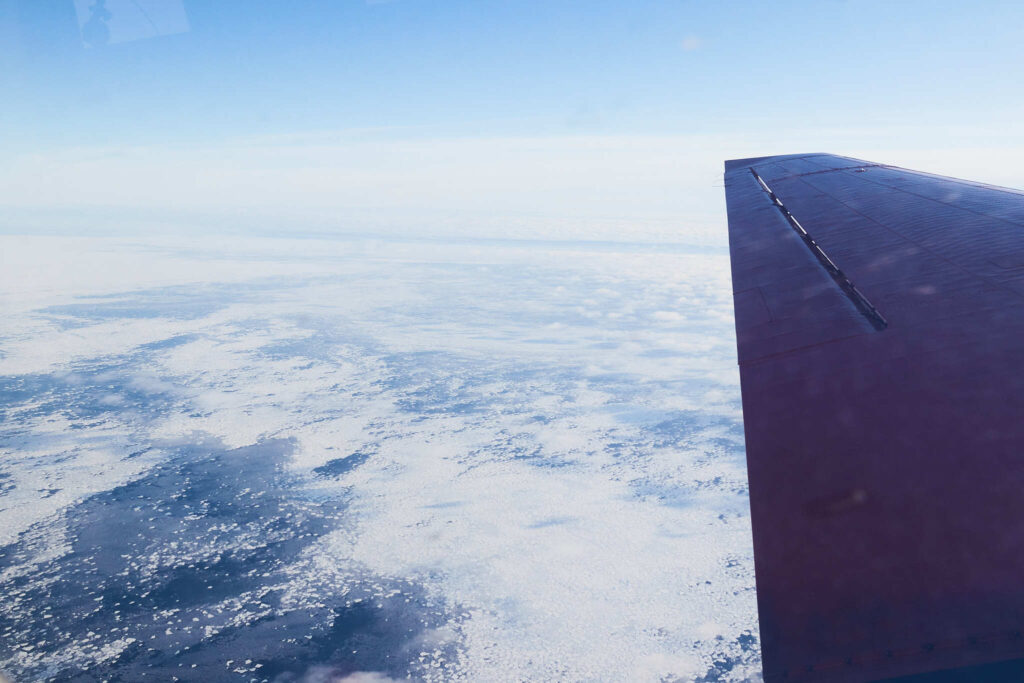
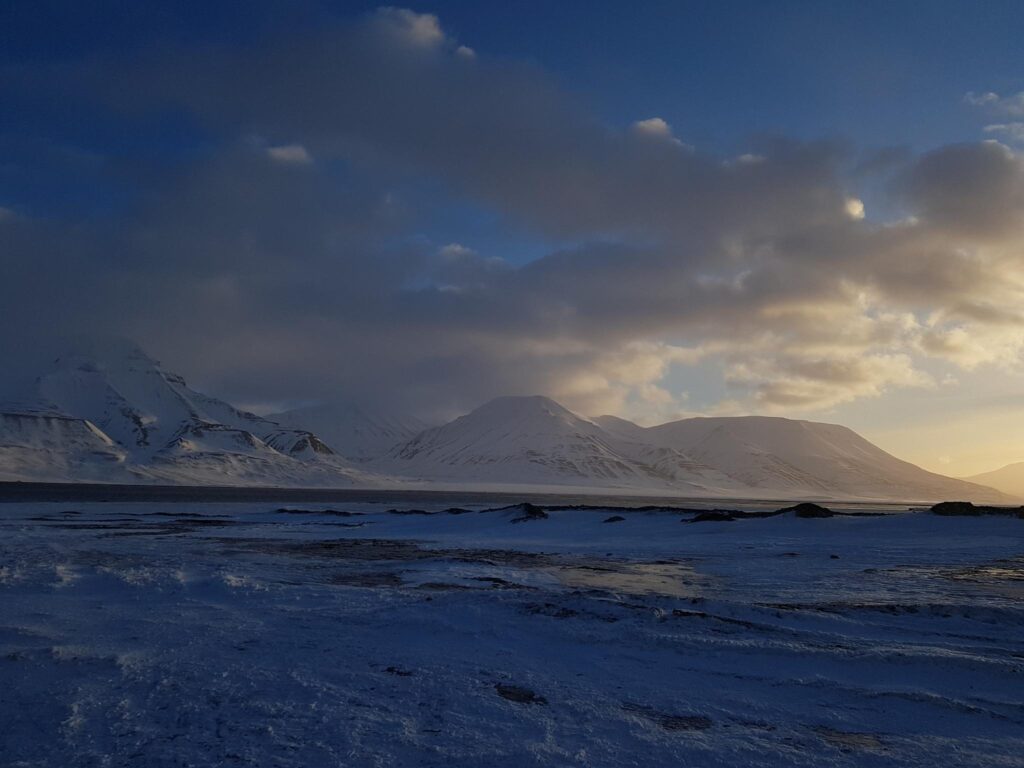
To study these processes, we first flew northwest toward the ice edge, passing the stunning mountains and glaciers of Svalbard. The main challenge was to find the right region. Using the latest satellite imagery and a lot of experience, we carefully observed the ice both with our instruments and visually from above.

And then – at the very last moment – we found it: an area with numerous leads, cloud-free and therefore perfect for our dropsonde experiment. Thanks to excellent teamwork between the crew on board and support from the ground, we were able to identify a suitable lead and investigate it using a series of dropsondes released in quick succession.

With stopwatches, calculators, and real-time flight data, we quickly determined the exact timing and position for releasing the sondes. The first results look very promising – a great success!

The plan had been uncertain for a long time, full of question marks. All the greater is the excitement that we managed to turn it into reality. A huge thank you to the entire team – what an amazing flight! 🚀

Spatial Variability of Precipitation in Kongsfjorden

Five hours of flight time today, heading northwest over Kongsfjorden with the primary objective of investigating the spatial variability of precipitation in Kongsfjorden. Off the coast of Spitsbergen, there was a distinct convergence line with significant precipitation, which was also predicted very well by the model. This line was very stationary; two flyovers yielded very similar measurement data.

We reached the sea ice edge, which we were also able to observe from the plane due to the presence of only low-level clouds.

What made yesterday’s flight special was the close coordination with the AWIPEV station in Ny-Ålesund. This allowed us to observe the same clouds both from above (from the aircraft) and from below (from the ground station). These dual measurements are crucial for testing and validating our assumptions about the attenuation of radar signals.

By coordinating dropsondes from Polar 5 and radiosondes from Ny-Ålesund, we were also able to observe katabatic winds in Kongsfjorden, as significant differences in the data were evident here. Katabatic winds are cold winds that flow down from higher elevations and often occur in polar regions. Due to the complex weather conditions, today was entirely devoted to planning for tomorrow. Then it’s all about: LEADS, LEADS, LEADS! We’re excited to see if we can carry out our plan tomorrow.

Halfway through COMPEX

We’re back, and a lot has happened in the last few days. On March 26 and 27, we had two more research flights: a shorter flight over the northerly stream across the Fram Strait to capture the cloud streets, and another Cold Air Outbreak flight, including a rendezvous with EarthCARE. This means we can proudly and happily look back on eight successful research flights in the first half of the campaign.

Over the weekend, the new researchers for Part 2 of COMPEX gradually arrived in Longyearbyen, which also meant saying goodbye to many from the first part. We celebrated this with pizza, billiards, table soccer, and board games on Sunday evening.

Starting the new week, we had another flight today with a new crew heading west over the open ocean. There, we found predicted low-level clouds and wonderful views from Polar 5, so everyone returned with a big smile.

A cute Arctic fox wished us a good night and a good flight tomorrow, during which we’ll be flying over Ny-Ålesund and Kongsfjorden again. Stay tuned!

What a start at Svalbard!

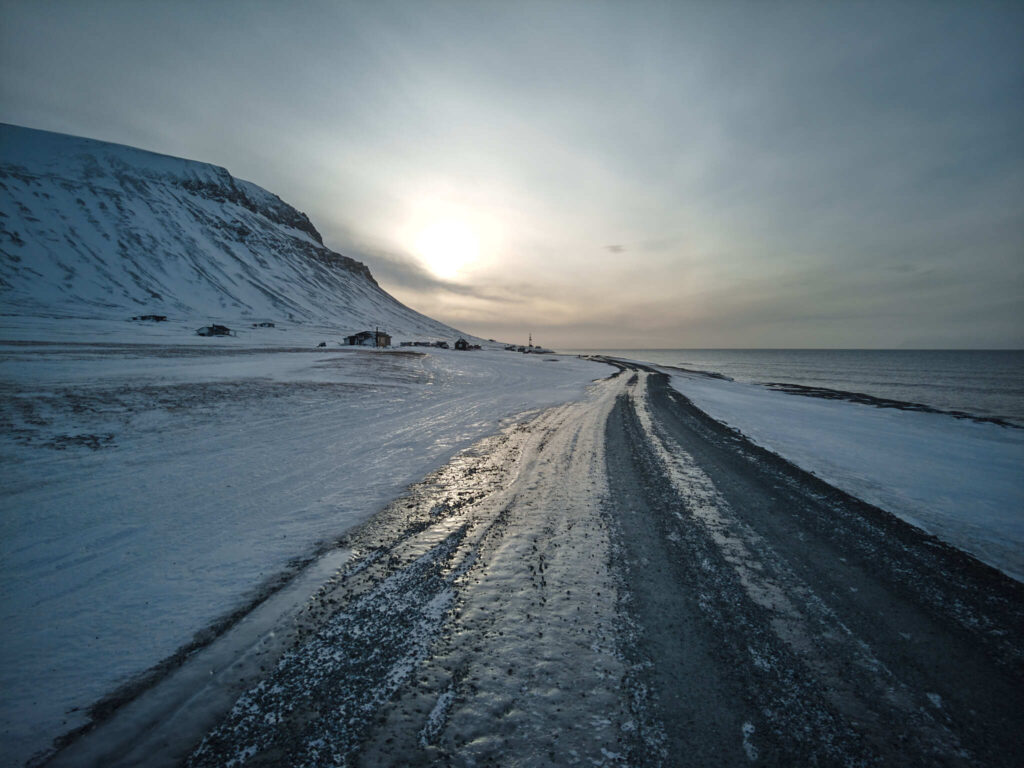
Finally, the last (AC)³ campaign is about to begin. COMPEX – Clouds over cOMPlEX environment – starts with windy conditions, but Polar 5 arrived safely. Over the next 5 weeks, we will conduct research flights from Longyearbyen, Svalbard, to investigate Arctic clouds and precipitation in regions with complex topography and sea-ice conditions. Using a suite of advanced remote sensing instruments on a research aircraft, the campaign will measure cloud microphysics, precipitation, radiation, and atmospheric thermodynamic structure, including in-cloud and sub-cloud water vapor profiles. The observations will support the validation of satellite measurements from the EarthCARE mission and improve the understanding and modeling of cloud and precipitation processes in the Arctic. After landing, we unload the aircraft under real arctic conditions. The temperature was around -11 °C, and we had strong easterly winds up to 80 km/h, so with wind chill, it felt much colder (-25 °C). Tomorrow’s flight is already planned to head west and target the sea ice edge. Let’s hope for good flying conditions and clouds like those predicted in the model.

Stay tuned!

Even a good thing has to come to an end

COMPEX-EC in the field is over, and it was a full success. Two weeks in Kiruna with the beautiful Polar 5 research aircraft, equipped with a pretty cool suite of instruments, and all that run by an amazing crowd, was such a good time. Wow! Wow! Wow!

We had seven research flights focusing on under-flying EarthCARE, summing up to more than 30 flight hours. Weather conditions were flyable almost all the time. We could investigate a few cold air outbreaks in the mature state, which was fascinating to see from above and in the instruments. Pretty sure the data collected will serve well for the validation study in the upcoming months. Look out for results on well-known conferences and workshops.

And with that, I’d like to say goodbye and thank you very much for following us.

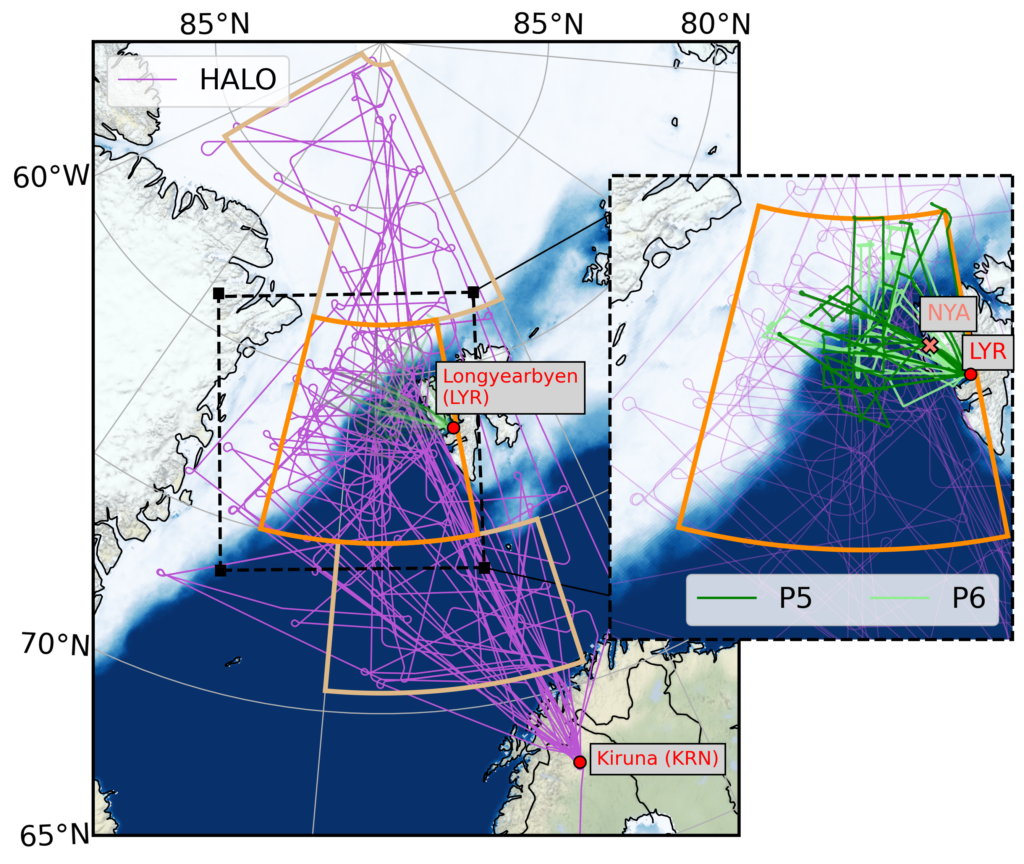
The well-designed COMPEX-EC logo (credits to Friedhelm Jansen (MPI Hamburg)) and all 7 research flights of COMPEX-EC over a digital terrain model and the mean sea ice conditions during the campaign (University of Bremen).

Snow White and the 7 flights

Today we took off for the 7th and last time with Polar 5. With a newly mixed crew, all PhDs were able to fly again, one of them even made her debut as PI. Mika actively supported her and helped, for example, to write the flight log.
As a PI, of course, you also have other tasks. The day before, the flight route has to be planned and a flight plan has to be written and sent out. During the flight, you have to keep an eye on the flight altitude and the times when the planned points are reached. You also communicate with the pilots from time to time and make sure that all measurements are started and finished at the right time. But of course, everyone thinks along and knows what to do with their instruments, so they make it easier for you to complete the PI tasks.
The view during the flight was great again – we flew over Porsangerfjord on the north coast of Norway, where we could observe the cloud cover thickening towards the north. On the satellite track we launched 5 dropsondes this time and the satellite flew over us in such a way that Polar 5 can be seen again as a signal in the EarthCARE radar data!
Everyone was very happy with this last flight. But Mika was also a little sad because it was the last flight for COMPEX-EC and he had enjoyed flying so much. But the next campaign is sure to come and you can also look forward to a final blog entry in which we look back on the campaign and say goodbye to you!